Kanagawa
Kanagawa: From the bustling energy of Japan's largest "Yokohama Chinatown" to the fresh ocean breezes of Enoshima.
Blending the exotic, international port city vibe of Yokohama with the laid-back surf culture of Enoshima, Kanagawa Prefecture offers a wildly diverse food scene—from authentic steaming dim sum to fresh seafood caught just hours ago.
Essential Soul Food
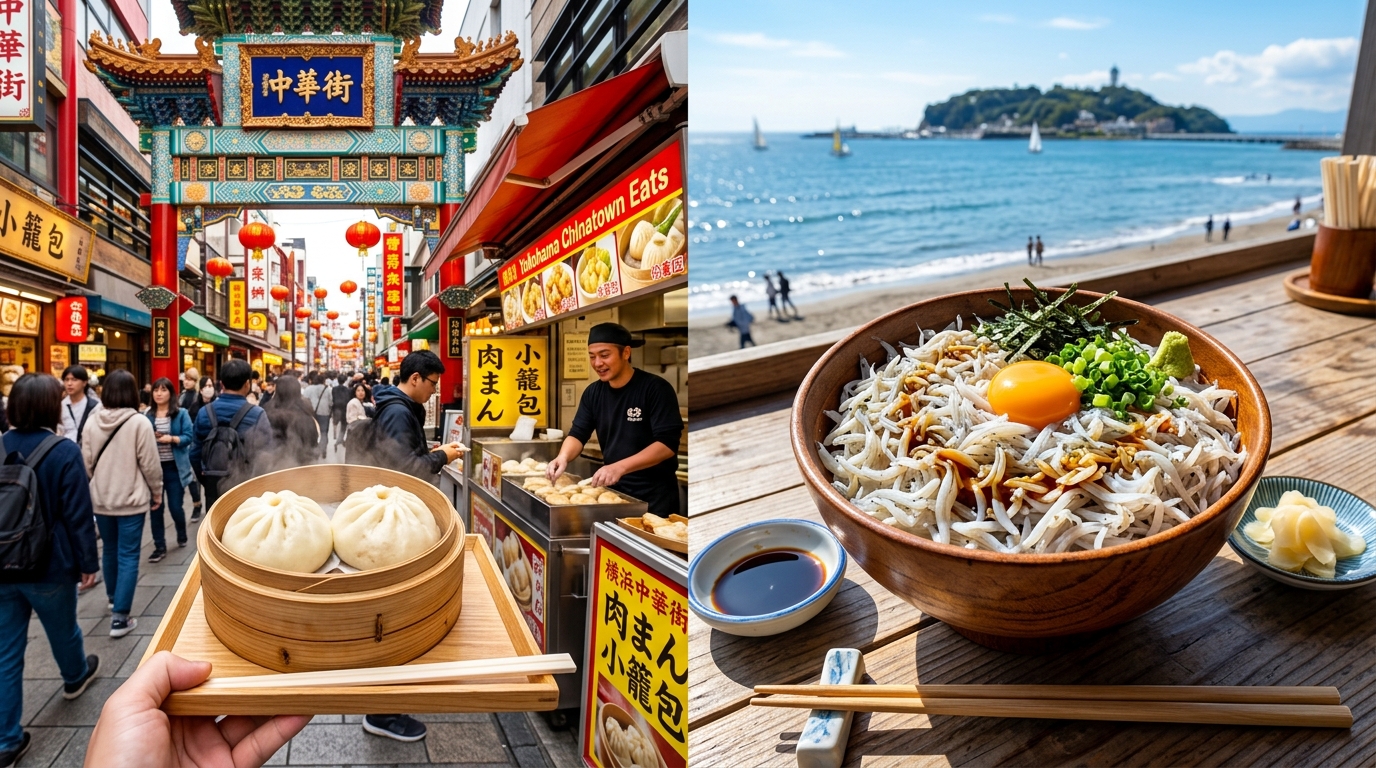
- Yokohama Chinatown Food: With over 500 restaurants and stalls, this is Japan's largest Chinatown. It's a paradise for street snacks, featuring everything from giant, fluffy steamed meat buns (Nikuman) to scalding, soup-filled Xiao Long Bao.
- Shonan Shirasu: Whitebait is the undisputed king of Enoshima and the Shonan coast. "Nama-shirasu" (raw whitebait) requires absolute freshness and offers a smooth texture with a sweet, oceanic flavor. The "Kamaage-shirasu" (kettle-boiled whitebait) is fluffy and savory. A half-and-half rice bowl is the ultimate local meal.
Dining Culture
In Yokohama Chinatown, the culture revolves around buying piping hot snacks from storefronts and enjoying them on the spot. In contrast, dining in Enoshima is all about taking your time at coastal terraces or traditional diners, savoring the catch of the day while feeling the ocean breeze.
Local Rules & Taboos
Because these are major tourist destinations, there are strict local rules—and unique threats from nature—to ensure everyone eats safely.
⚠️ Beware of the Black Kites (Tobi) in Enoshima: Walking around Enoshima with food in your hand is extremely dangerous. Large birds of prey known as Black Kites will silently and rapidly swoop down from the sky, snatching the food right out of your hands with sharp claws. Always eat under a roof, beneath a parasol, or with your back firmly against a wall so the birds cannot target you.
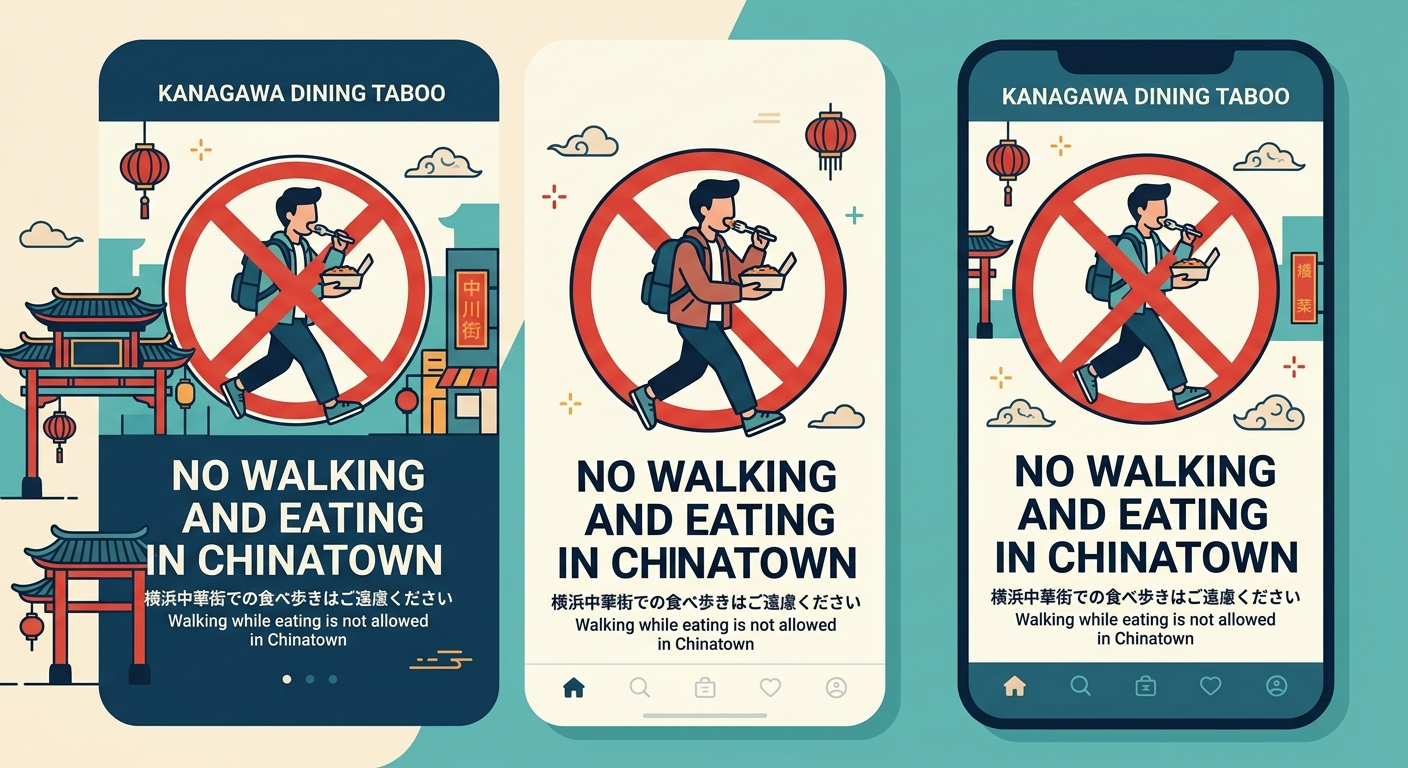
- In Chinatown, "Stand and Eat," do not "Walk and Eat": While Chinatown is famous for street food, literally walking through the crowded streets while eating is officially discouraged. It causes accidents with skewers and spills on other people's clothes. The proper etiquette is to stand still directly in front of the store where you bought the food, or eat in a designated park.
- Return your trash to the store: There are almost no public trash cans in Yokohama Chinatown. You must return your empty containers and dangerous wooden skewers to the dedicated trash bins of the exact shop where you made your purchase.
- Check availability for Raw Shirasu: Raw shirasu is highly perishable. It is strictly unavailable during the fishing ban (January to mid-March). Even outside the ban, restaurants will not serve it if the weather is bad or the daily catch fails. If it's a must-eat for your trip, always check the restaurant's social media for the day's catch status before you go.