East Japan
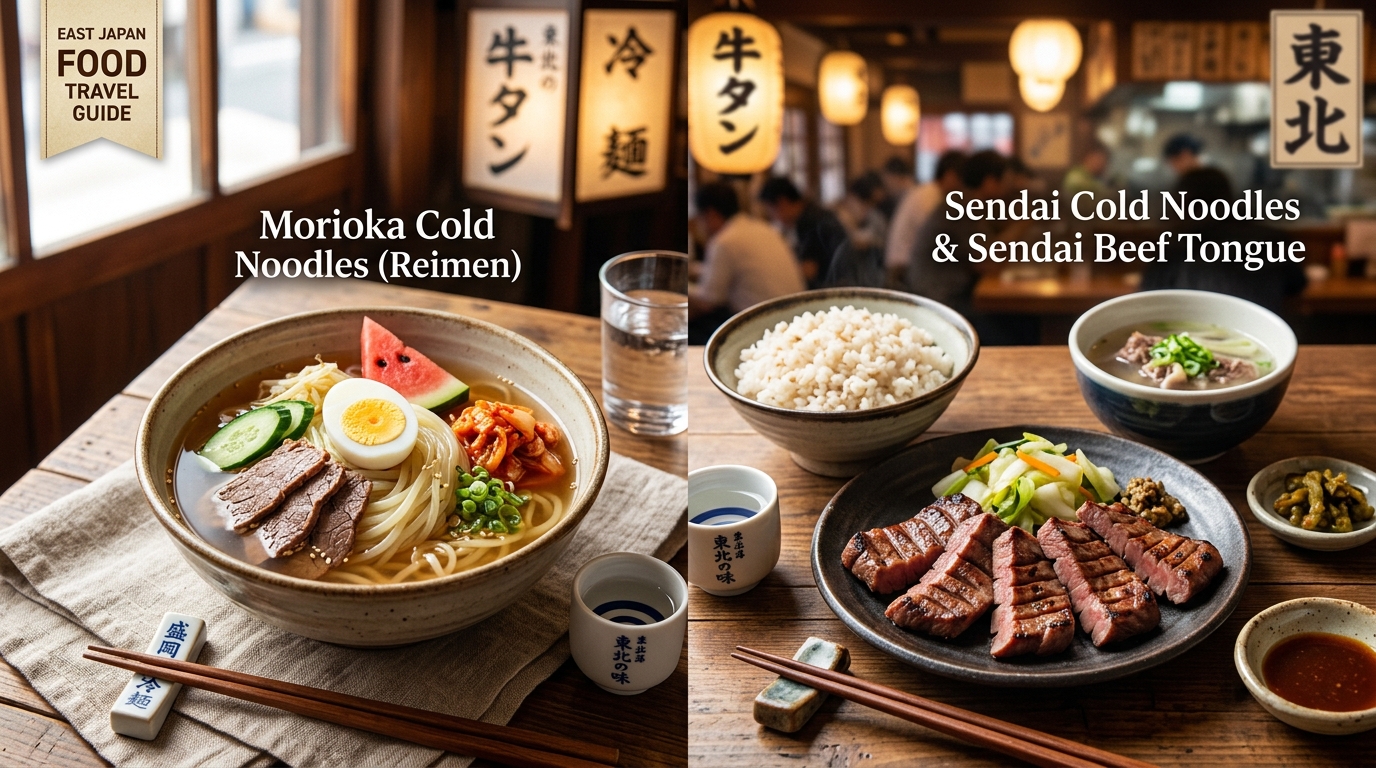
East Japan pulses with the traditions of samurai culture. The rich aroma of bonito flakes and the sharp, salty punch of dark soy sauce form the foundation of its palate. From the refined Edomae cuisine of Tokyo to the rustic, hearty local dishes of the Tohoku region, deep umami flavors spread across the entire area.
Must-Eat Soul Food
Soba and Dark Tsuyu
"Soba in the East, Udon in the West." In East Japan, fragrant buckwheat soba is deeply loved. The dipping sauce (tsuyu) is a bold, dark mixture of bonito dashi and dark soy sauce. The chic local way to eat it is to dip only the bottom half of the noodles into the sauce, allowing the natural aroma of the buckwheat to shine.
The Edomae Technique
Edomae sushi relies on traditional techniques (called shigoto, or "work") applied to seafood caught in Tokyo Bay. Similarly, Edomae tempura is fried in fragrant sesame oil. Originally developed to satisfy the notoriously impatient Edo locals, this food culture prioritizes speed without ever sacrificing ultimate flavor.
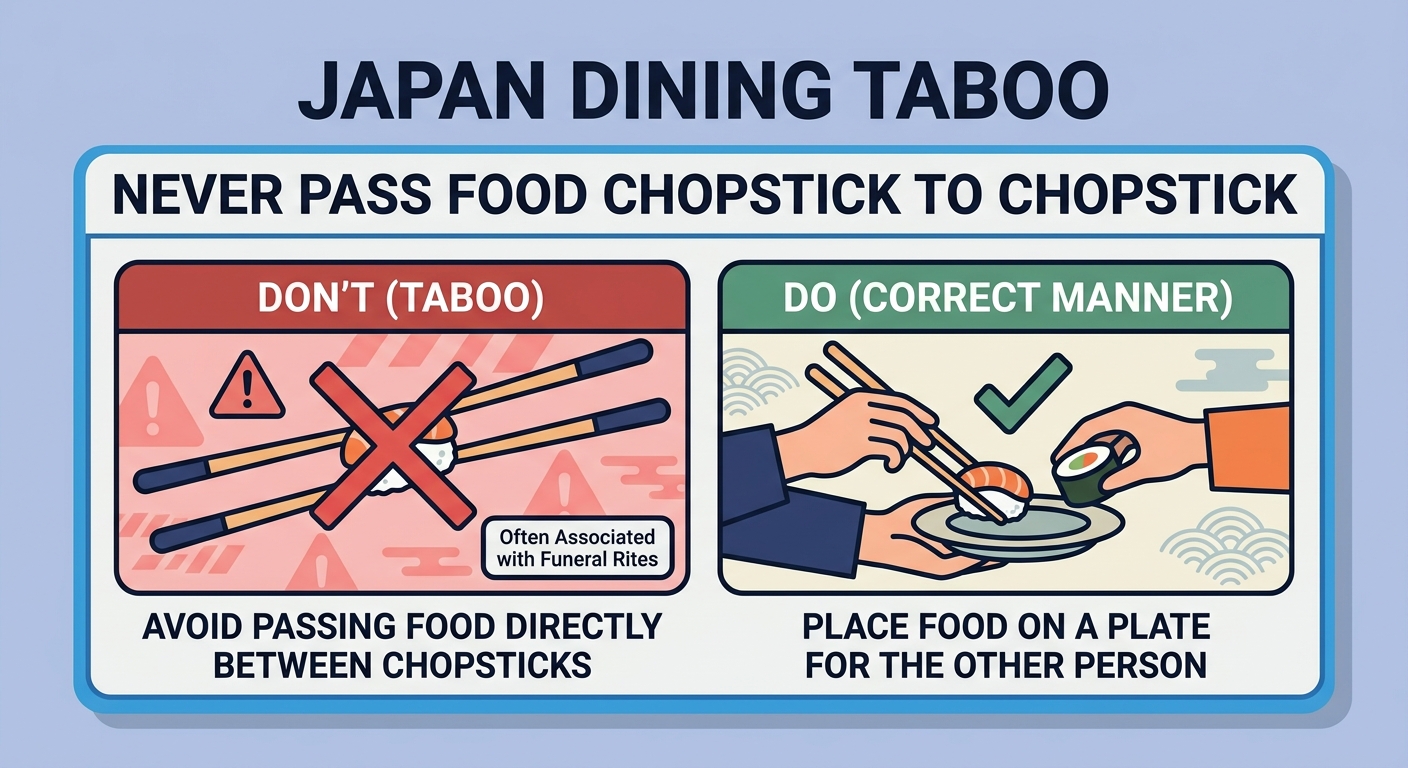
Local Rules & Taboos
Daily rules and flavors shift dramatically between the East and the West, heavily influenced by their distinct historical backgrounds.
⚠️ WARNING: Stand on the Left on Escalators In Tokyo and most of East Japan, the unwritten rule is to "stand on the left, walk on the right" on escalators. It is said this tradition traces back to the samurai era, where warriors walked on the left side of the road to prevent the scabbards of the swords worn on their left hips from clashing.
⚠️ WARNING: Slicing Eel from the Back If you eat grilled eel (unagi) in East Japan, you will be amazed by its fluffy texture. In the samurai city of Edo, slitting the belly was heavily frowned upon as it reminded them of seppuku (ritual suicide). Therefore, eels in the East are sliced open from the back, steamed, and then grilled, resulting in a melt-in-your-mouth tenderness.