
Washoku
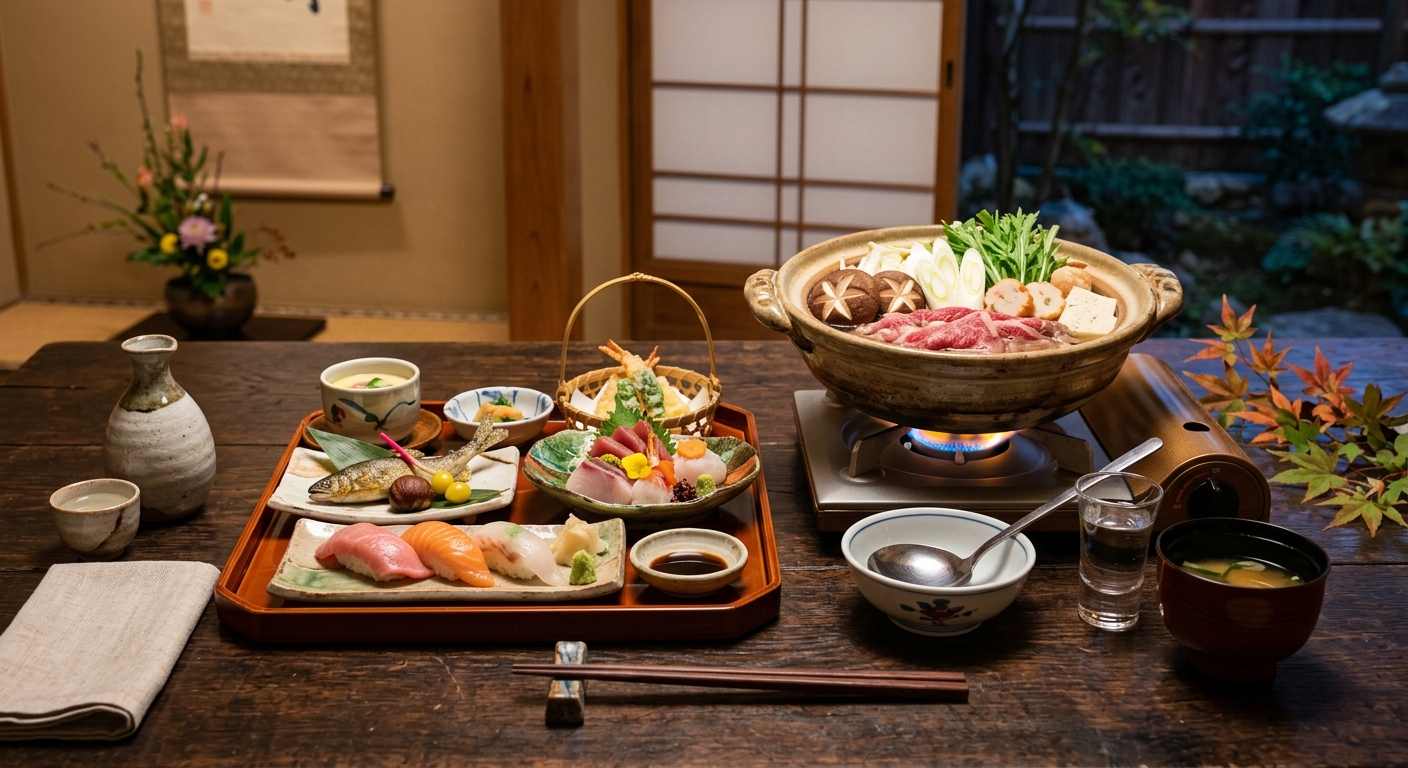
Recognized as a UNESCO Intangible Cultural Heritage, Washoku (traditional Japanese cuisine) is more than just food. It is a culmination of respect for nature, delicate aesthetics, and the spirit of Omotenashi (hospitality).
History and Philosophy
The foundation of Washoku is Ichiju-sansai (one soup, three sides). Blessed with abundant mountains and oceans, Japan developed a culinary culture centered on Dashi (umami broth), designed to extract the absolute maximum natural flavor from every ingredient.
The Diverse Styles of Washoku
- Kaiseki: The highest peak of multi-course dining, inheriting the philosophy of the tea ceremony. It transforms seasonal ingredients into a feast for both the eyes and the palate.
- Sushi & Tempura: Born as fast food from street stalls in the Edo period, these are now globally revered icons of Japanese cuisine.
- Shojin Ryori: Traditional Buddhist temple food. It is the ultimate healthy cuisine, made entirely from plant-based ingredients like vegetables and tofu, strictly prohibiting meat and fish.
The Beautiful Way to Eat Washoku
- Lift Your Bowl: Whether it is rice or soup, you must pick up the bowl with both hands and bring it close to your mouth. This is the most fundamental rule of Japanese dining.
- Handle Chopsticks Properly: Pick up your chopsticks from the rest using your right hand, support them underneath with your left hand, and gracefully adjust your grip.
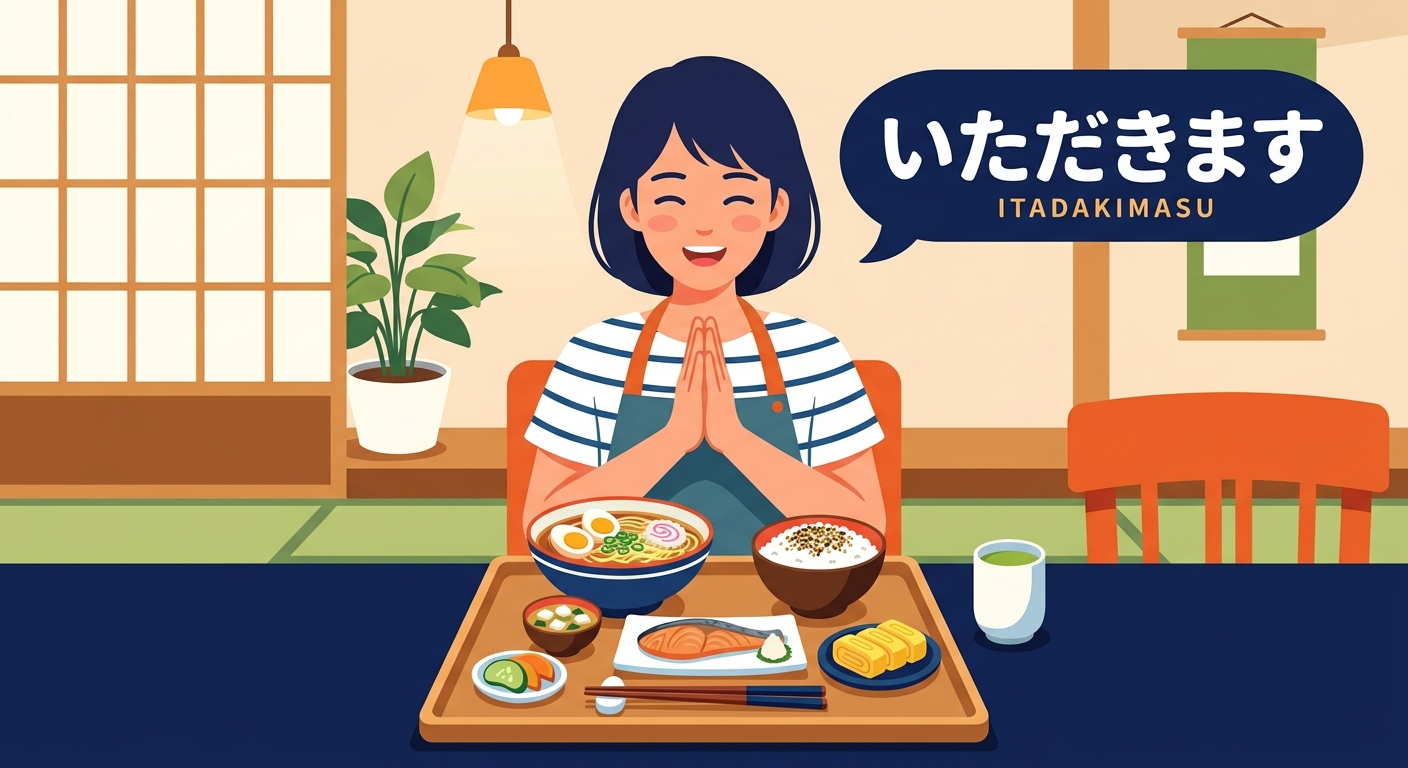
- Give Thanks: Place your hands together and say "Itadakimasu" before the meal to thank the ingredients and the chef, and "Gochisosama" when you finish.
⚠️ Local Rules & Taboos
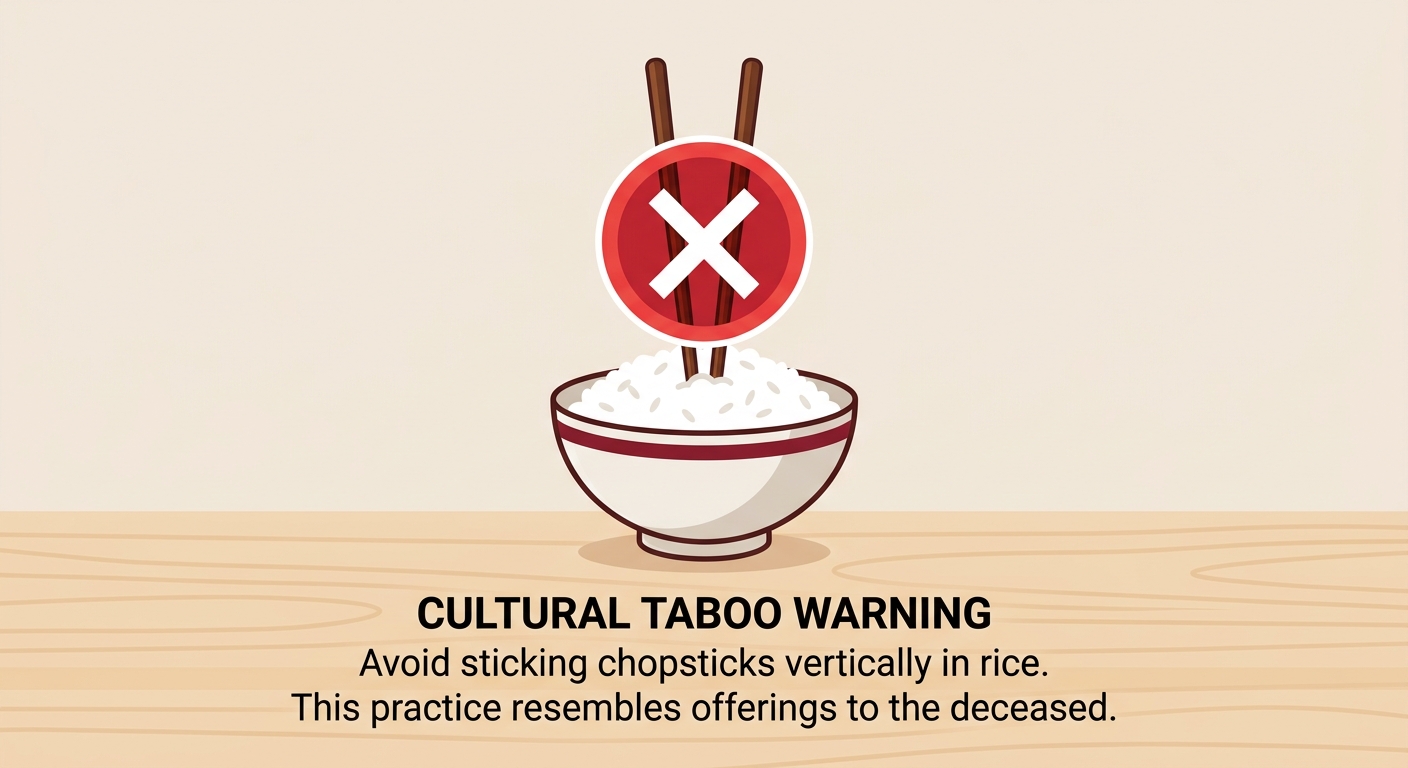
- Never Pass Food Chopstick-to-Chopstick: This is the ultimate taboo (Hashi-watashi), as it mimics the ritual of passing cremated bones at a traditional Japanese funeral.
- No "Hovering" or "Stabbing": Hovering your chopsticks over dishes while deciding what to eat (Mayoibashi), or stabbing food with a chopstick, is considered extremely rude.
- Do Not Drag Dishes: Pulling a bowl across the table damages both the tableware and the table. Always lift the dish with both hands to move it.