Yakiniku
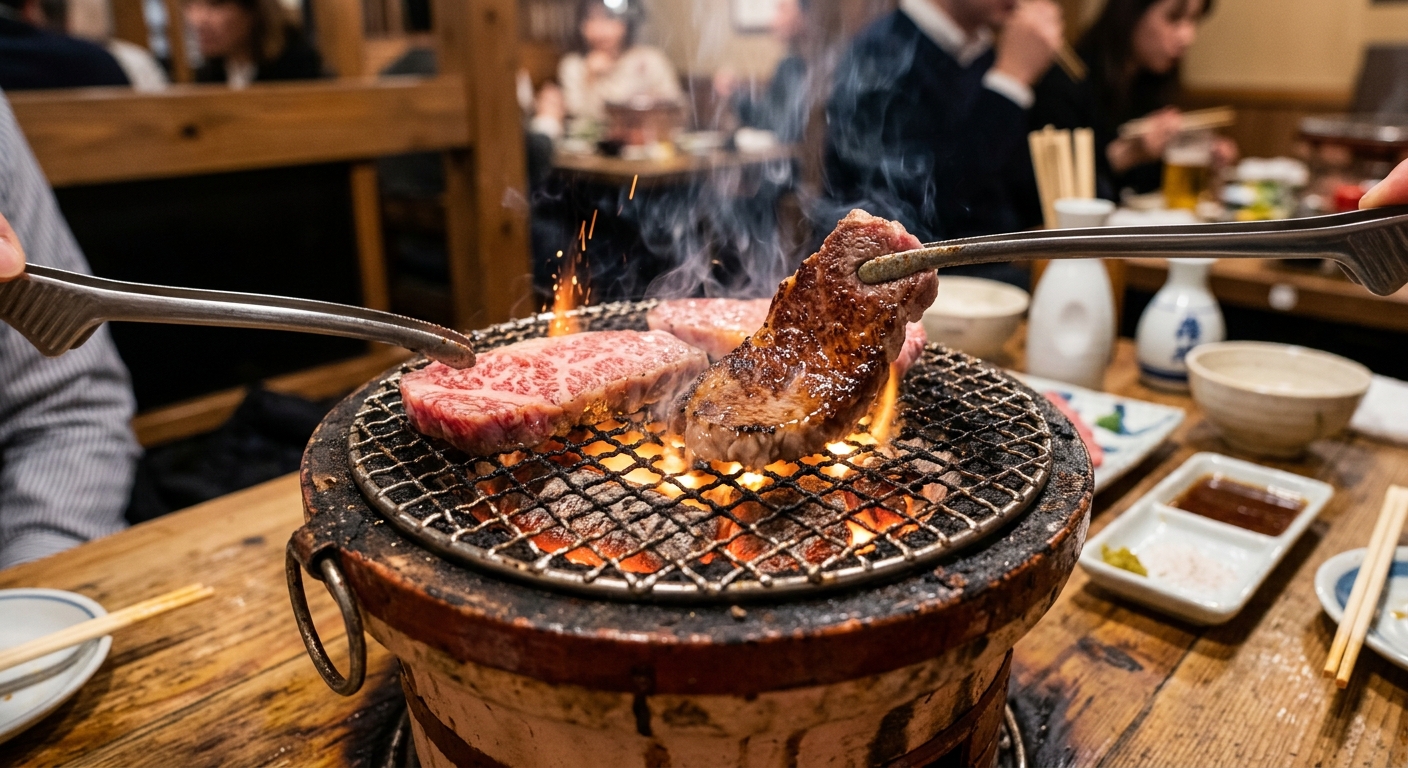
The satisfying sizzle of fat hitting the charcoal, the rising smoke carrying the scent of soy and garlic—Japanese "Yakiniku" is a DIY culinary spectacle designed to extract the maximum umami from premium Wagyu beef.
A Culture Forged in Fire
Modern yakiniku traces its roots back to post-WWII Japan, when Korean immigrants began grilling heavily marinated offal (Horumon). Today, the Japanese evolution of this cuisine focuses intensely on the natural, unadulterated flavor of the meat itself. Unlike Korean BBQ, which often features large, pre-marinated cuts, Japanese yakiniku serves bite-sized, premium slices that you cook first, then lightly dip into salt or a sweet soy-based sauce (Tare).
The Golden Rule: Tongue First
When you sit down at a yakiniku restaurant, your very first order should be salted beef tongue (Tan-shio). This is an unspoken rule of Japanese dining for two critical reasons:
- Palate Priming: Tongue is delicate. Eating it first with a squeeze of fresh lemon and a dash of salt awakens your palate before it gets overwhelmed by the rich, heavy sauces of other cuts.
- Preserving the Grill: If you start with a sauce-heavy cut like short rib (Karubi), the sugars will instantly burn onto the grill grate. That bitter char will ruin the flavor of every piece of meat you cook afterward.
Grill Mastery and Etiquette
To properly respect high-end Wagyu, you must master the etiquette of the grill.
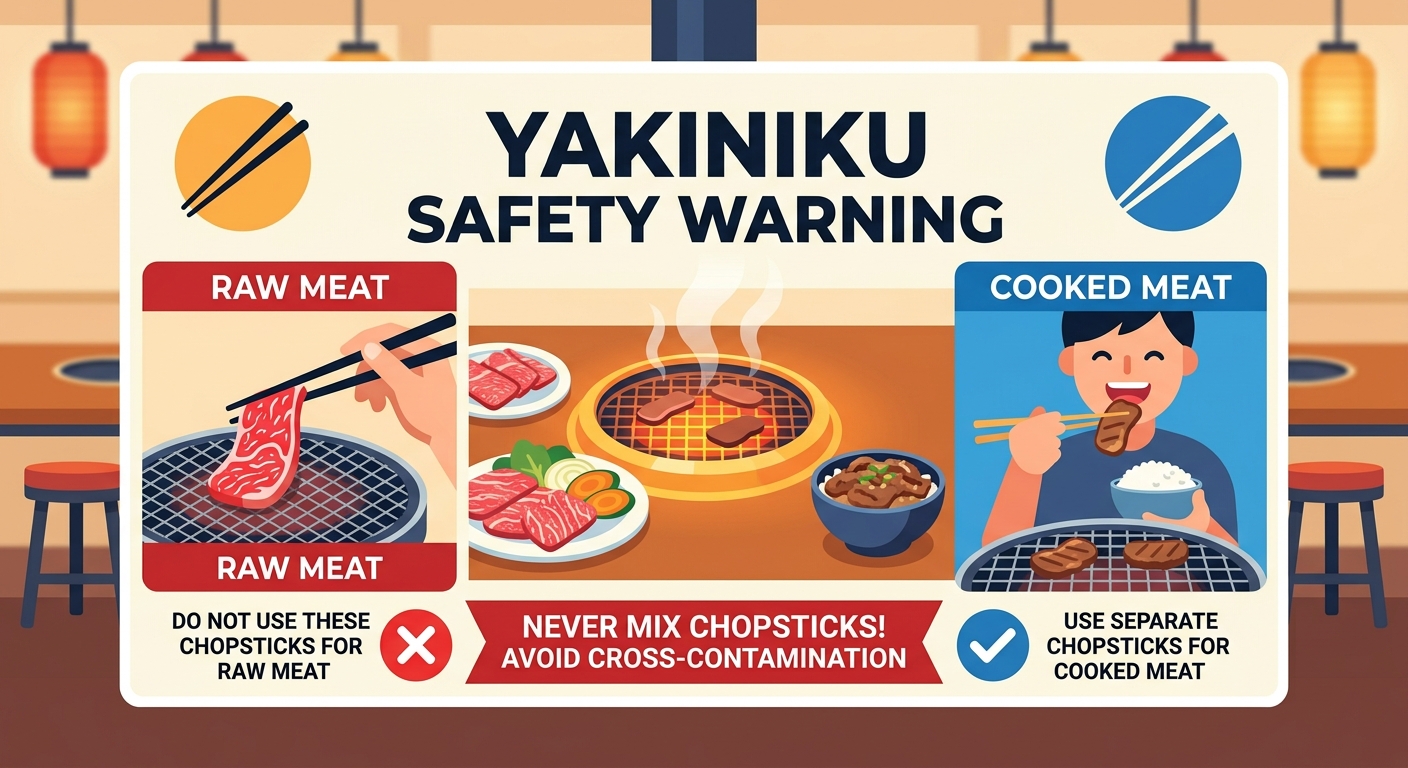
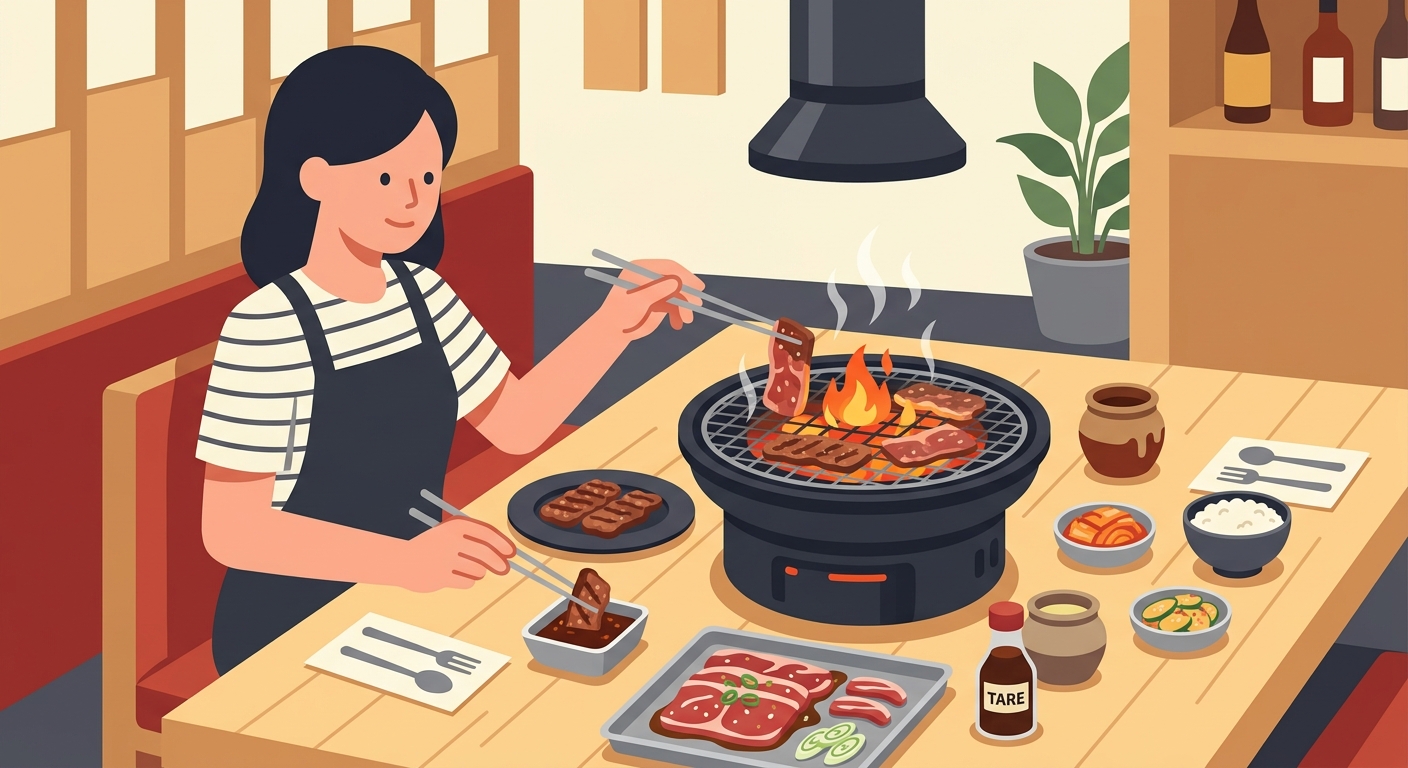
⚠️ The Golden Chopstick Rule: Never touch raw meat with the chopsticks you use to eat. Always use the provided metal tongs to move raw meat onto the grill. This is a strict hygiene rule to prevent foodborne illness.
Do not overcrowd the grill. Place only two or three pieces down at a time so you can monitor them closely—you want to flip thin cuts only once. And if your grill grate starts looking blackened and crusty, politely ask the staff for an "Ami-koukan" (grill net replacement). They expect and welcome it!