
Chicken Cuisine
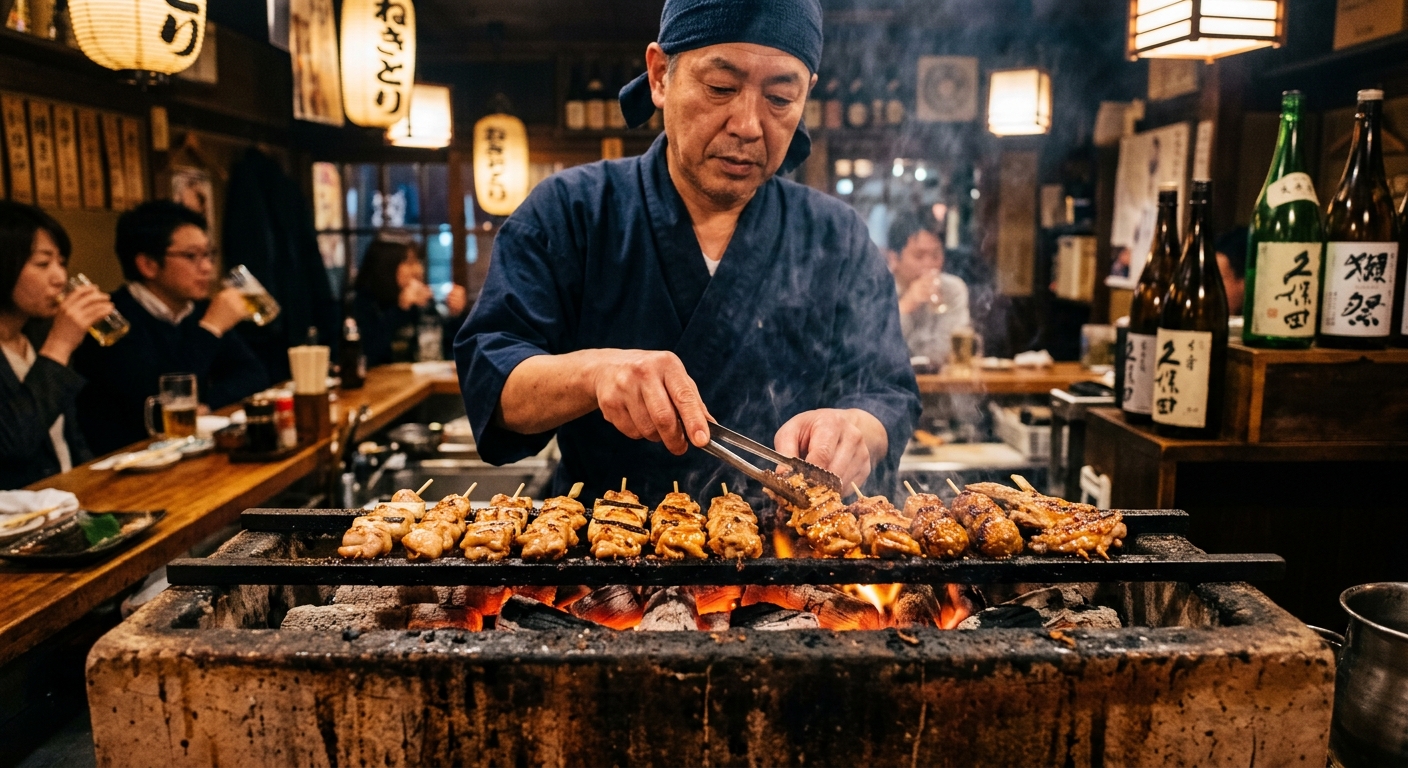
The irresistible smoky aroma of charcoal-grilled skewers and the rich, collagen-packed depth of slow-simmered broth. Japanese chicken cuisine represents the ultimate "nose-to-tail" soul food, celebrating every part of the bird.
Yakitori & Mizutaki: The Two Pillars
When it comes to chicken in Japan, "Yakitori" (grilled skewers) and "Mizutaki" (chicken hot pot) reign supreme. Yakitori ranges from casual standing bars to high-end dining, focusing on the distinct textures of different cuts. Mizutaki, born in Fukuoka (Hakata), is a luxurious communal hot pot featuring a milky, umami-dense chicken broth.
History and Origins
- Yakitori: While skewered food has ancient roots, modern Yakitori became a mass-market comfort food in the mid-20th century. It pioneered the culture of eating every part of the chicken without waste.
- Mizutaki: Invented in Fukuoka in 1905 by Heizaburo Hayashida, who cleverly blended Western consommé techniques with Chinese-style chicken stew. It's now celebrated nationwide as a skin-nourishing "beauty hot pot."
Styles and Premium Ingredients
- Yakitori Seasoning: You will usually choose between "Shio" (salt) to highlight the natural meat and charcoal flavor, or "Tare" (sauce), a sweet-savory soy glaze that caramelizes beautifully on the grill.
- Jidori (Premium Local Chicken): Look out for "Jidori" (like Nagoya Cochin or Hinai Jidori). Raised free-range under strict Japanese standards, this chicken offers an incredible, firm chew and a significantly deeper flavor than standard broilers.
Authentic Eating & Etiquette
To truly enjoy these dishes like a local, follow these unwritten rules.
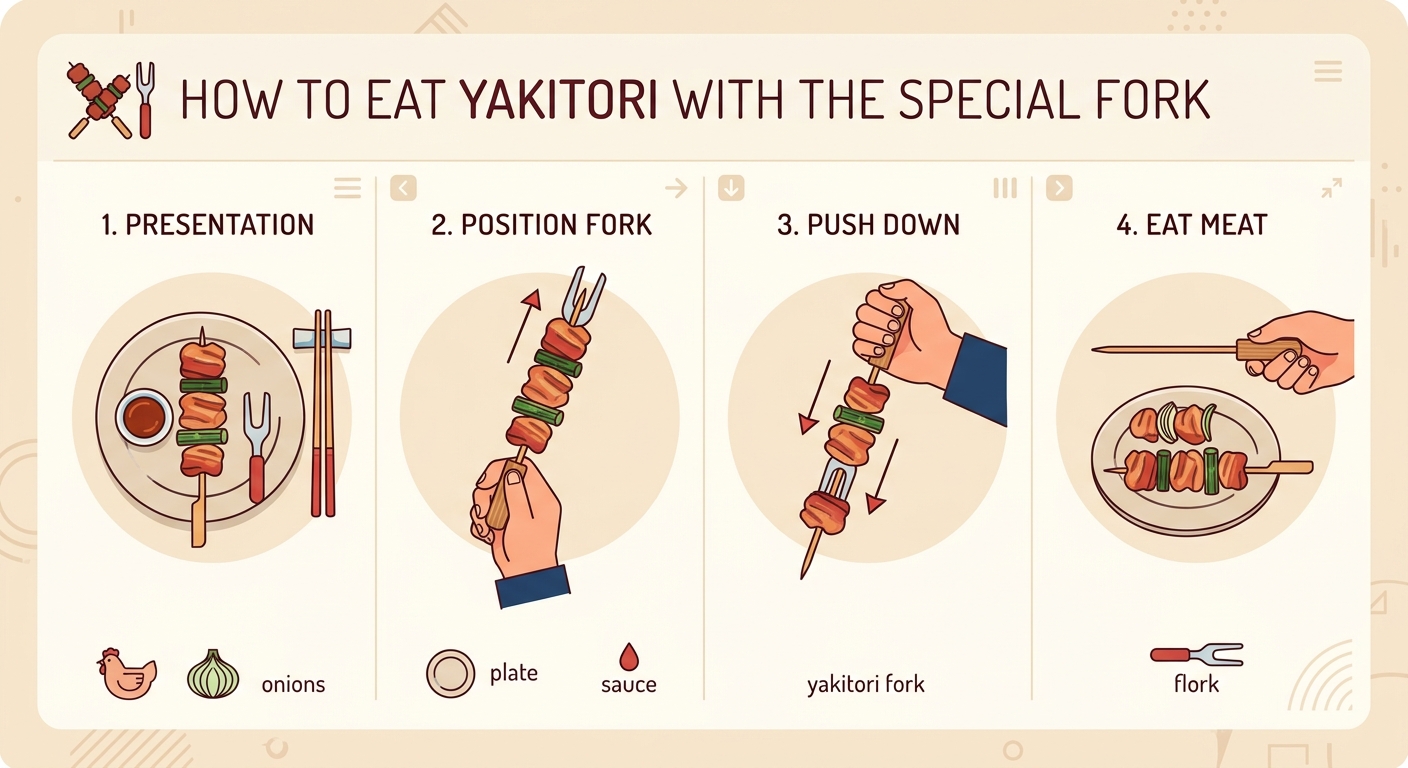
Yakitori Etiquette
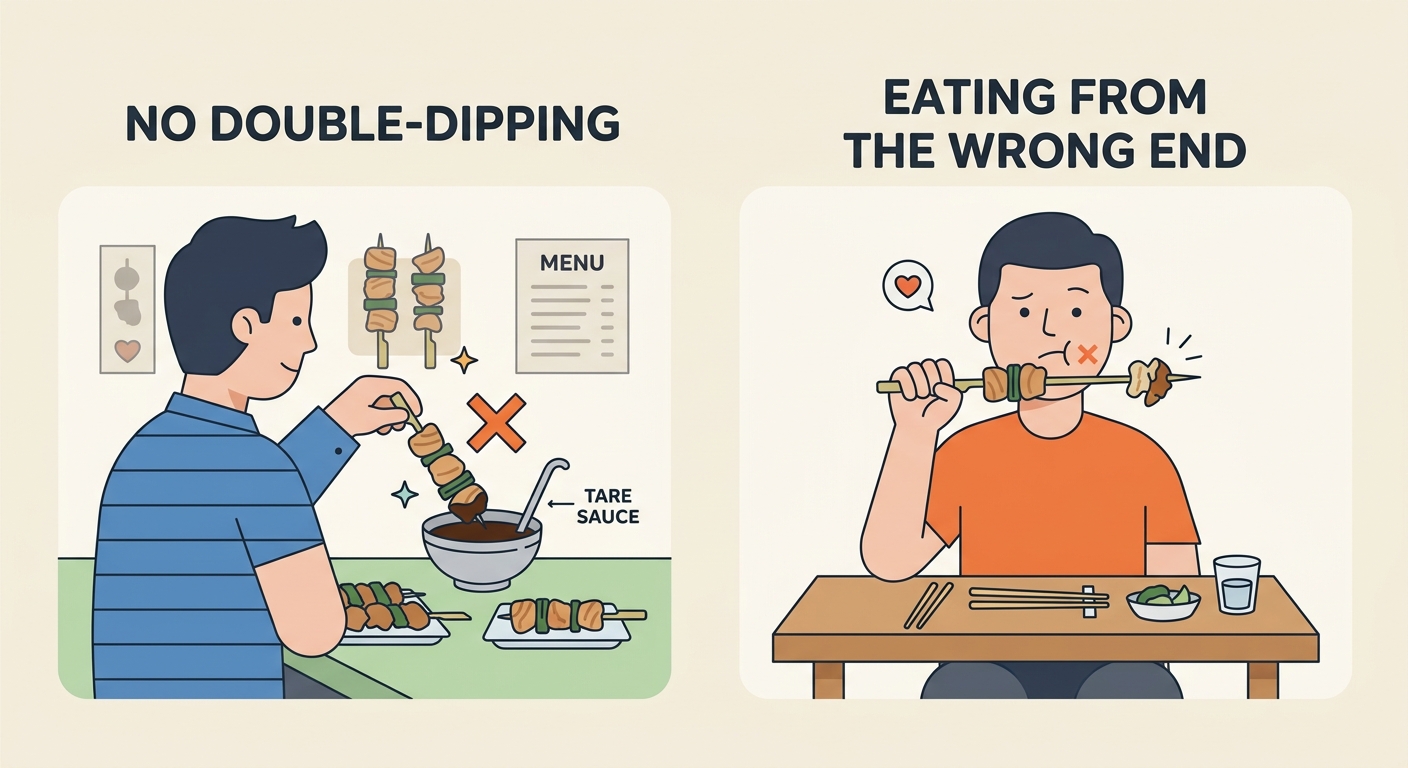
- Eat Off the Skewer: Stripping all the meat off the bamboo stick with your chopsticks is generally frowned upon as "fussy." The best way to eat it is to bite directly off the skewer while it's piping hot.
- The Skewer Cup: Keep your table tidy by placing all finished bamboo sticks into the dedicated cylindrical cup (kushi-ire) usually provided on the table.
Mizutaki Etiquette
- Taste the Broth First: Before adding any meat or vegetables, scoop a little of the pure, milky broth into your cup, add a pinch of salt and green onions, and savor it. This is the authentic Hakata way.
- Ponzu and Yuzukosho: Dip the simmered chicken pieces into citrusy Ponzu sauce, accented with a dab of spicy Yuzukosho (citrus chili paste).
- The Finale (Zosui): Never waste the intensely flavorful leftover broth. At the end of the meal, add rice to the pot to make zosui (a savory porridge) to finish every last drop.
⚠️ WARNING: Don't Order Everything at Once Yakitori is meant to be eaten fresh off the grill. If you order 20 skewers at once, they will get cold and tough. The mark of a seasoned diner is ordering in small batches to pace your meal.
Trivia
Many unique Yakitori menu names—like "Sunagimo" (gizzard), "Hatsu" (heart), or "Chochin" (unlaid egg yolks)—originated as secret slang among traditional chicken butchers before becoming standard menu vocabulary.