
Tsukemen
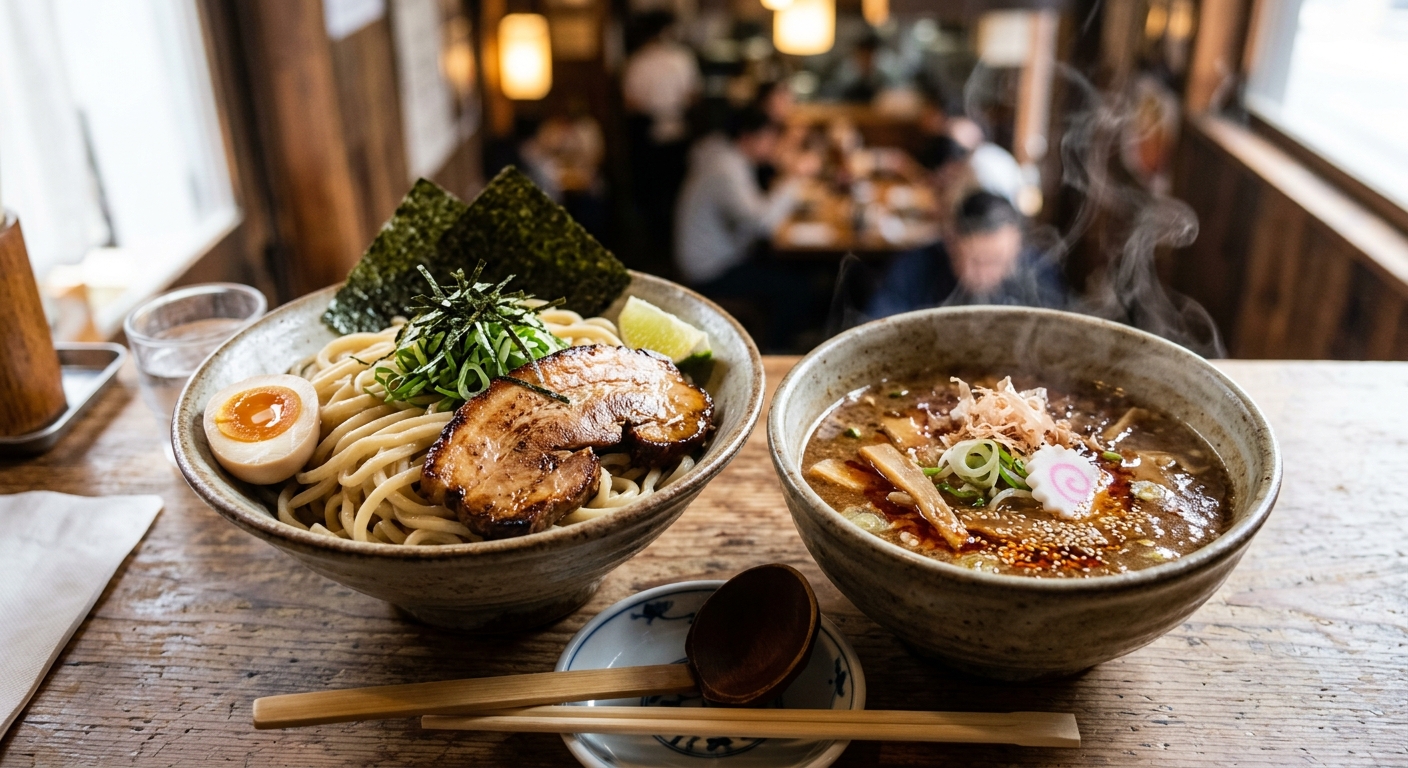
The exquisite contrast between piping-hot, rich broth and thick, cold water-tightened noodles—Tsukemen is the pinnacle of Japan's modern noodle culture, stepping far beyond the boundaries of traditional ramen.
A Revolution Born from a Staff Meal
It all started in 1955 at Taishoken in Nakano, Tokyo. The founder, Kazuo Yamagishi, created a "staff meal" by dipping leftover cold noodles into hot soup. Regular customers saw this and asked to try it, prompting its official menu debut as "Special Morisoba." Fast forward to the 2000s, shops like Rokurinsha established the modern standard: ultra-thick noodles paired with a heavy seafood-and-pork bone broth, sparking a nationwide Tsukemen boom.
Evolution of Regional Flavors
Today, Tsukemen goes far beyond the heavy seafood-pork broths. From light, refined soy sauce and rich chicken white broth (Tori-paitan) to creamy vegetable potage (Vegie-pota), shops across Japan continue to evolve the dish in endlessly diverse ways.
The Authentic Way to Eat Tsukemen
The true charm of Tsukemen lies in savoring the noodles themselves. Follow these steps to eat like a local pro:
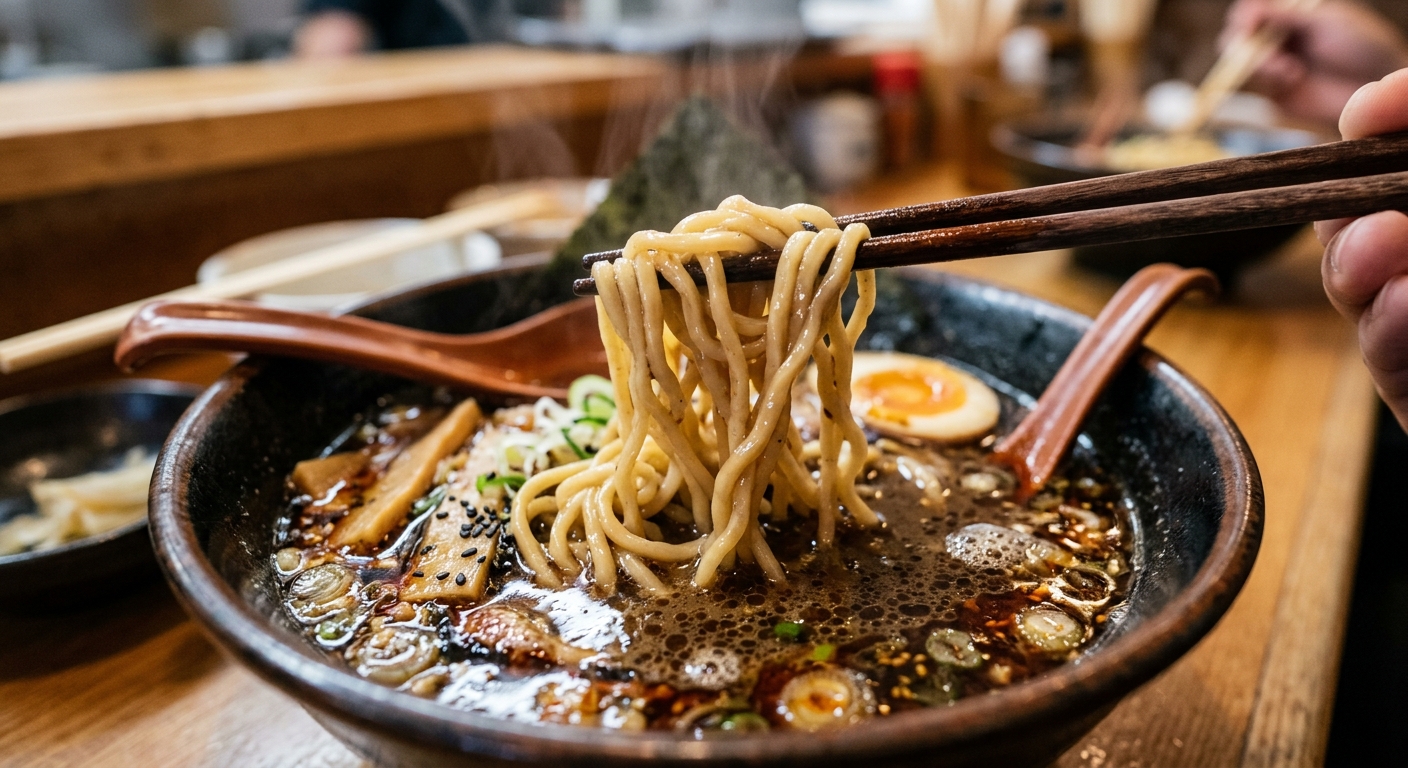
- Taste the Noodles First: Before dipping, eat one or two strands of the plain noodles to appreciate the natural wheat aroma and the firm, chewy texture.
- The Partial Dip: Because Tsukemen broth is significantly saltier than ramen soup, never submerge the entire bundle. Dip only the bottom half (or a third) of the noodles into the broth.
- The Grand Finale (Soup-wari): When you finish the noodles, do not drink the remaining concentrated dipping broth straight. Ask the staff for "Soup-wari" (soup dilution). They will add hot dashi to your bowl, turning it into a soothing, drinkable soup to finish your meal.
⚠️ Crucial Etiquette & Taboos
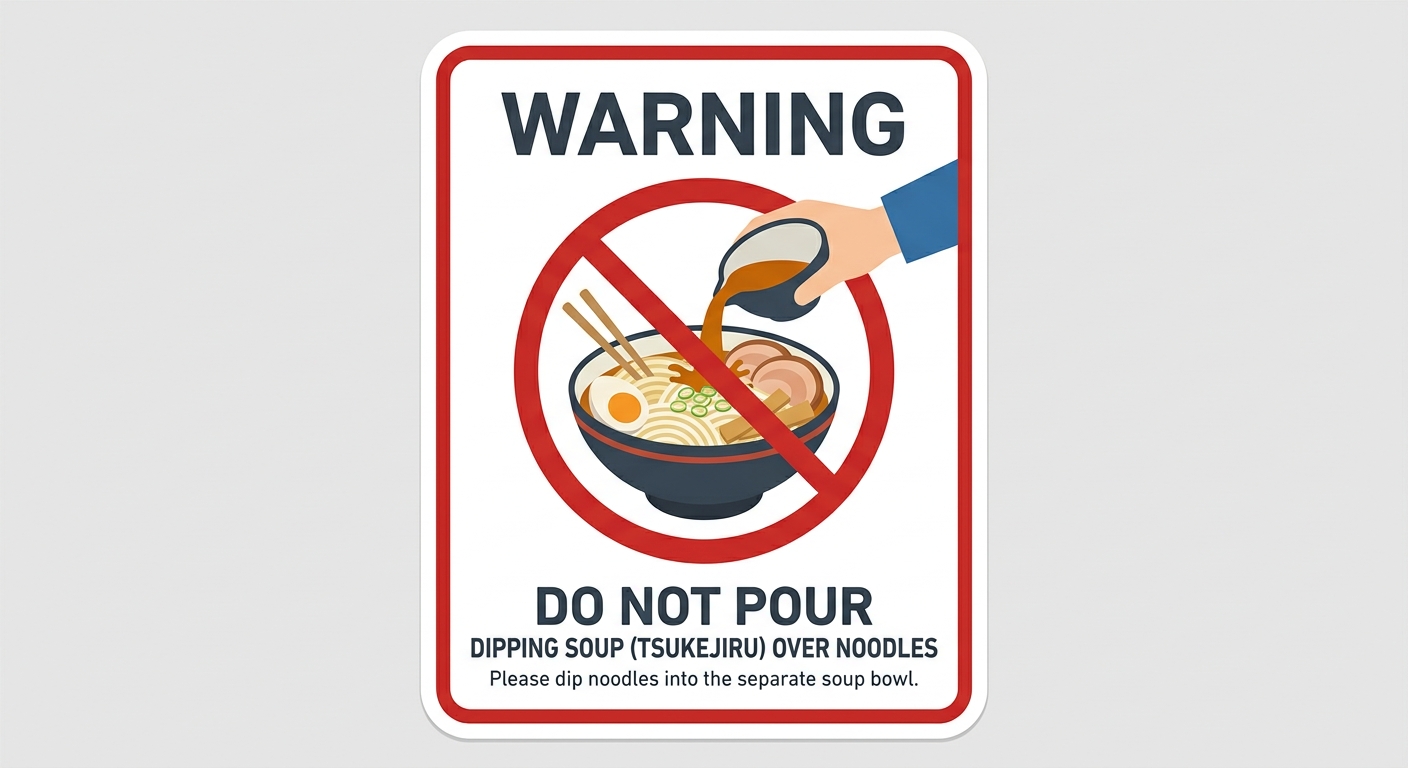
Never dump all your noodles into the soup bowl to turn it into "ramen." This destroys the essential contrast of temperature and texture. Furthermore, because Tsukemen noodles are thick and heavy, aggressive slurping can cause the dark soup to splash violently. Slurp with control to avoid splattering yourself or your neighbor.
Tsukemen Trivia
During the colder months, cold noodles might make your hot soup lukewarm too quickly. You can request "Atsumori" (hot noodles) when ordering. The shop will serve the noodles hot instead of chilling them, keeping your meal piping hot until the very last bite.