
Tempura
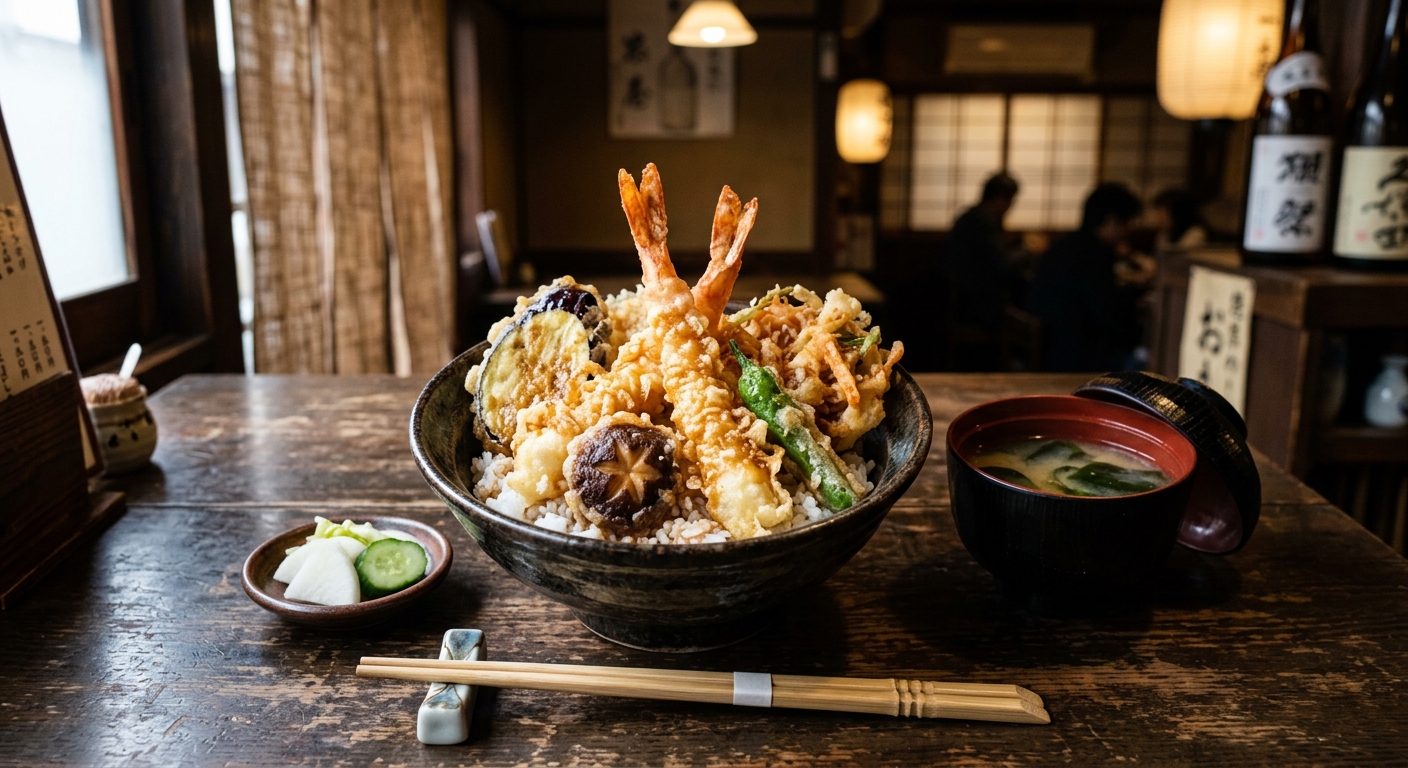
The lively crackle of hot oil, the feather-light golden batter, and the intense, sealed-in umami of fresh seafood and vegetables. Tempura is the highly refined Japanese art of deep-frying, designed to elevate the natural potential of every ingredient.
History: Western Encounter to Edo Fast Food
Tempura traces its roots to the 16th century when Portuguese missionaries introduced deep-frying techniques to Nagasaki. The name itself likely stems from the Catholic Ember Days (Quatuor Tempora). During the Edo period, the constant threat of fires in wooden houses meant deep-frying indoors was dangerous. Thus, tempura emerged as a popular outdoor street-stall "fast food." Today, it has evolved into a high-end culinary experience featuring incredibly delicate, lace-like batter.
Kanto vs. Kansai Styles
- Kanto (Tokyo Style): Traditionally uses sesame oil, resulting in a rich, fragrant, and golden-brown batter. It is typically enjoyed with a robust dipping sauce (tentsuyu).
- Kansai (Kyoto/Osaka Style): Uses neutral vegetable oil for a thinner, paler batter. To preserve the delicate flavors and colors, it is most often eaten with salt rather than sauce.
The Art of Eating Tempura
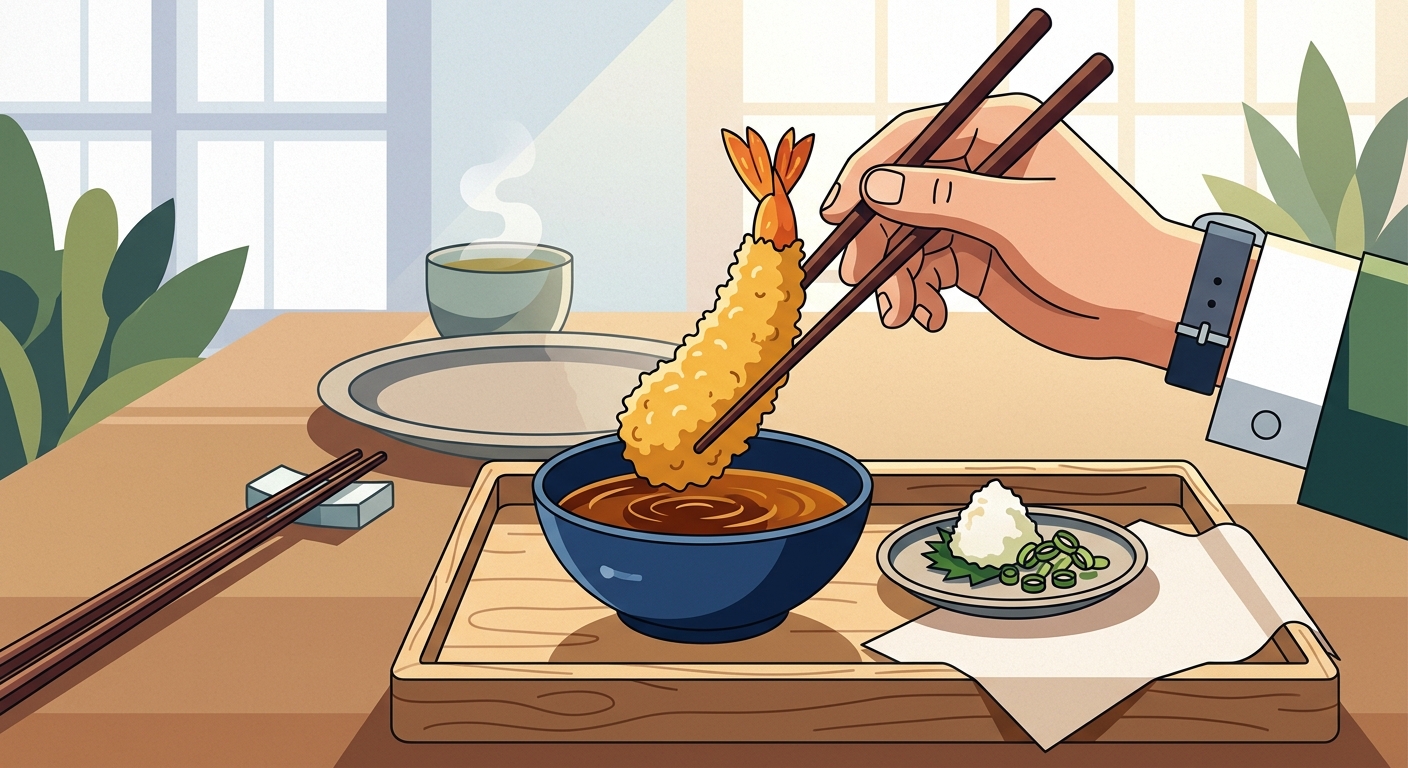
- Eat from front to back: Tempura platters are strategically arranged. Lighter-tasting items (like shrimp or white fish) are placed in the front, while heavier or vegetable items sit in the back. Eating front-to-back ensures a perfect flavor progression.
- Master the Salt vs. Sauce switch: Use salt for delicate ingredients like white fish and root vegetables to highlight their pure flavor. Use the dipping sauce (heavily loaded with grated daikon radish) for richer items or to cut through the oiliness.
- Speed is everything: Tempura peaks the exact second it leaves the fryer. Put away your phone and stop chatting—eat it immediately to experience the breathtaking contrast between the hot, crisp exterior and the juicy interior.
⚠️ Taboos to Avoid
⚠️ The "Hand Plate" (Tezara) is a faux pas: Cupping your left hand under the food to catch drips looks polite but is actually a breach of etiquette. Instead, hold your small dipping bowl or plate and bring it close to your mouth.
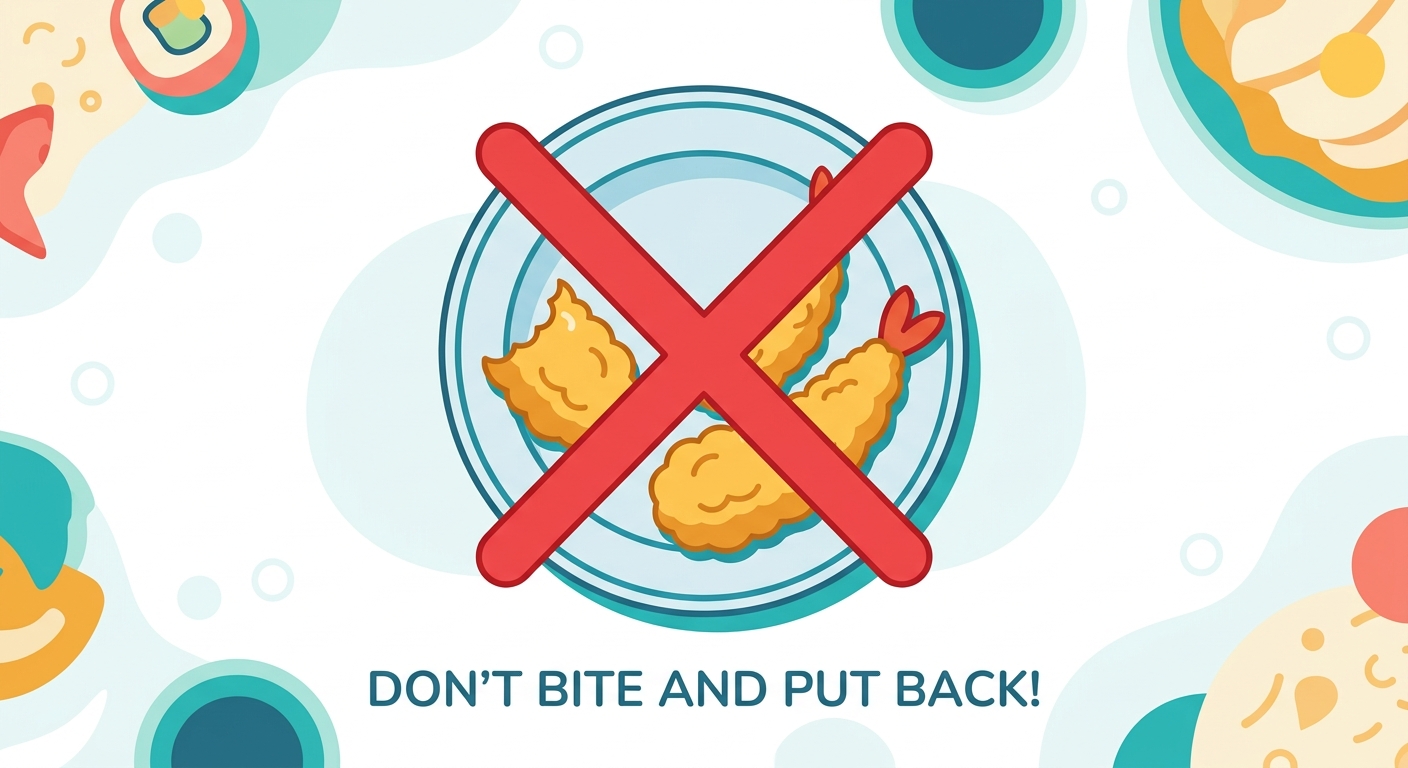
⚠️ Don't bite and return: If a piece of tempura is too large for one bite, hold the remaining half with your chopsticks until you finish it. Placing a half-eaten piece back onto your plate is highly disrespectful.