
Cafeteria
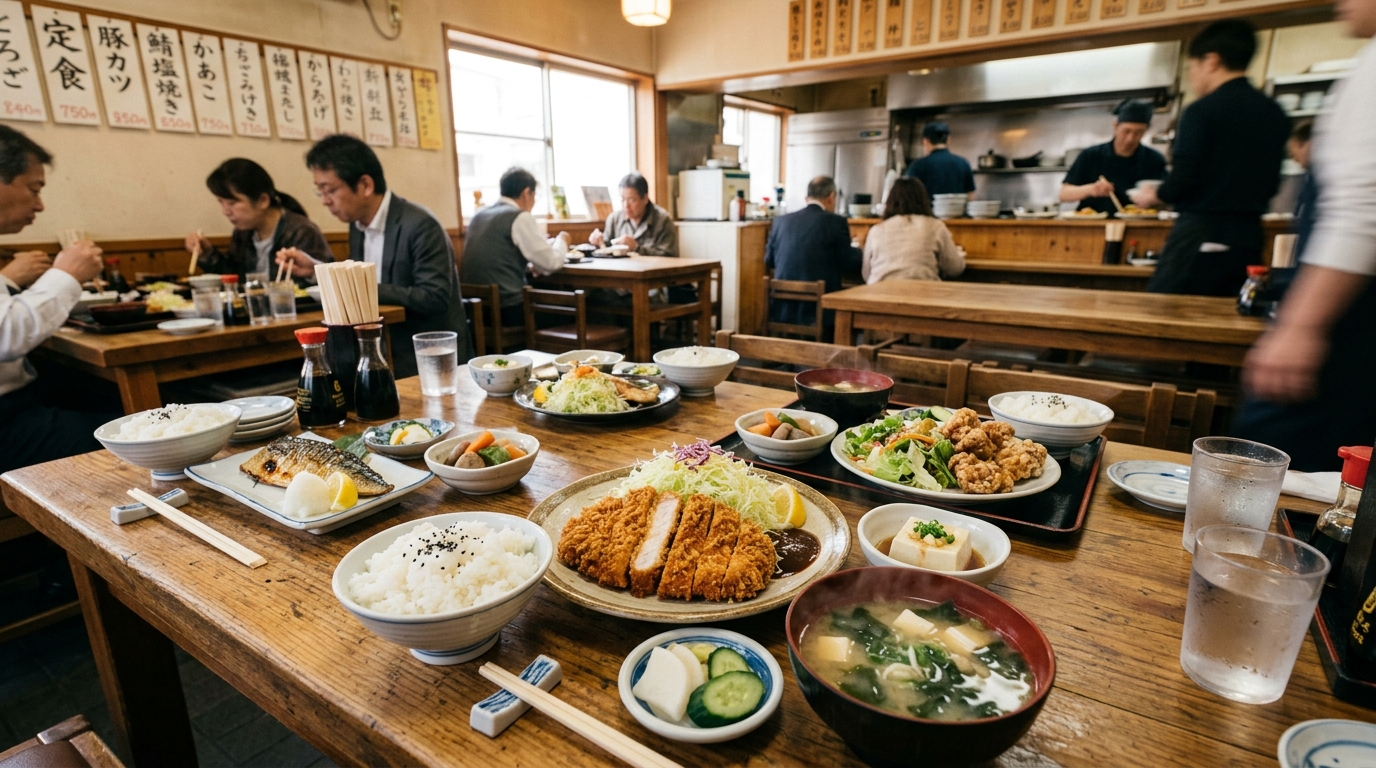
Shokudo (Dining Hall): Push aside the unpretentious fabric curtain, and you enter the heart of Japan's "soul food" kitchen. Cheap, filling, and deeply comforting, this is the everyday diner that fuels the working masses.
What is a Shokudo?
Far removed from the exclusivity of high-end kaiseki or premium sushi bars, a Shokudo offers deeply nostalgic "taste of a mother's cooking". Serving up unpretentious staples like grilled fish, tonkatsu, and simmered vegetables at unbeatable prices, it represents the raw, authentic pulse of Japanese daily food culture.
History & Origin
The roots of the Shokudo trace back to the quick-serve street stalls of the Edo period. During the Meiji and Taisho eras, Western-inspired dishes like curry and croquettes were integrated into the menus. The Shokudo hit its golden age during Japan's post-war economic boom in the Showa era. Today, deeply nostalgic "Showa-retro" diners remain beloved national treasures.
Local Variants
- The Teishoku-ya: The classic set-meal style. You receive a main dish served alongside a perfectly portioned bowl of white rice, hot miso soup, and crisp pickled vegetables.
- The Cafeteria Style: A self-service format. You grab a tray and slide down a long counter, picking up various small side dishes like cold tofu, salads, and fried foods. At the end of the line, you order your rice and soup, pay, and sit down.
Authentic Eating & Etiquette
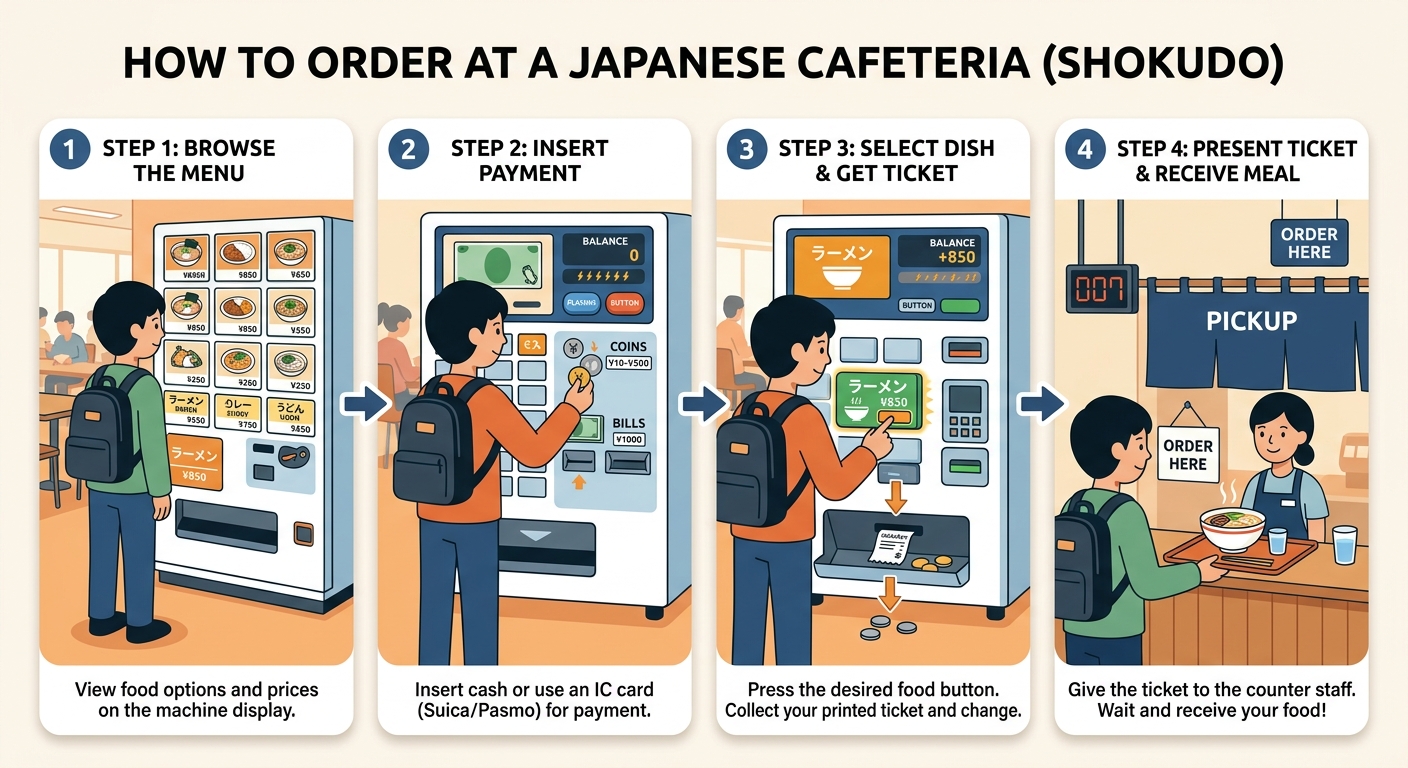
- The Shokken System: In many busy modern diners, your first step is to use a vending machine at the entrance to buy a meal ticket (shokken), which you hand to the staff. Water and hot tea are almost exclusively self-serve.
- Lift Your Bowls: In Japan, you must lift small bowls (rice and miso soup) off the table and bring them close to your mouth. Conversely, large, flat plates must remain firmly on the table.
- Slurp With Pride: When eating noodles like ramen, udon, or soba, loudly slurping is not just acceptable—it is encouraged. It cools the hot noodles, aerates the broth for better flavor, and signals your immense satisfaction to the chef.
Trivia
Japanese children are taught that "88 gods reside in a single grain of rice". Consequently, leaving even a single grain of rice at the bottom of your bowl is considered deeply disrespectful to the farmers and the gods.
Taboos & Warnings
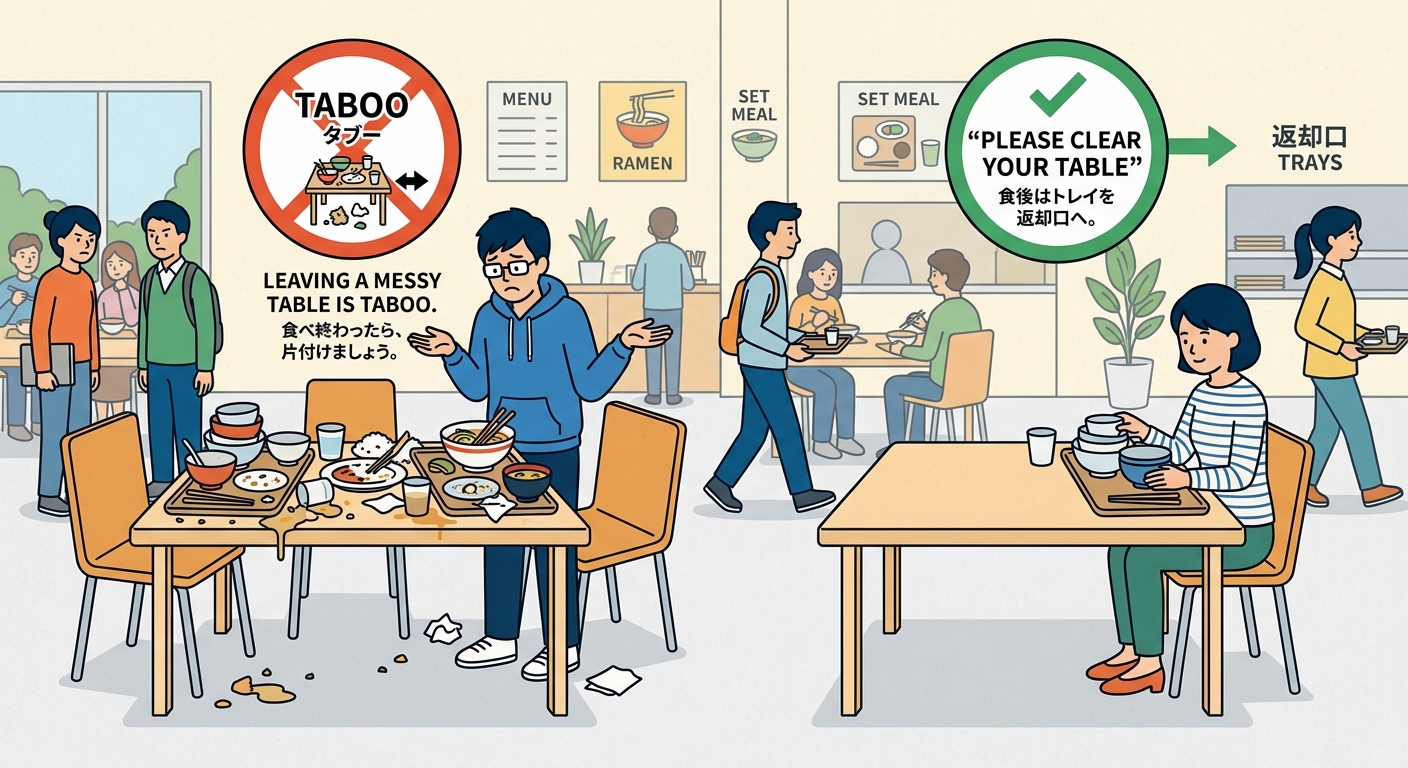
⚠️ Do Not Wipe Your Face with the Oshibori: The rolled wet towel (oshibori) provided when you sit down is strictly for cleaning your hands only. Vigorously wiping your face, neck, or using it to clean spills on the table is a major social faux pas. Additionally, the golden unspoken rule of the Shokudo is self-busing: you are absolutely expected to return your tray to the designated return window when finished.