
Indian Curry
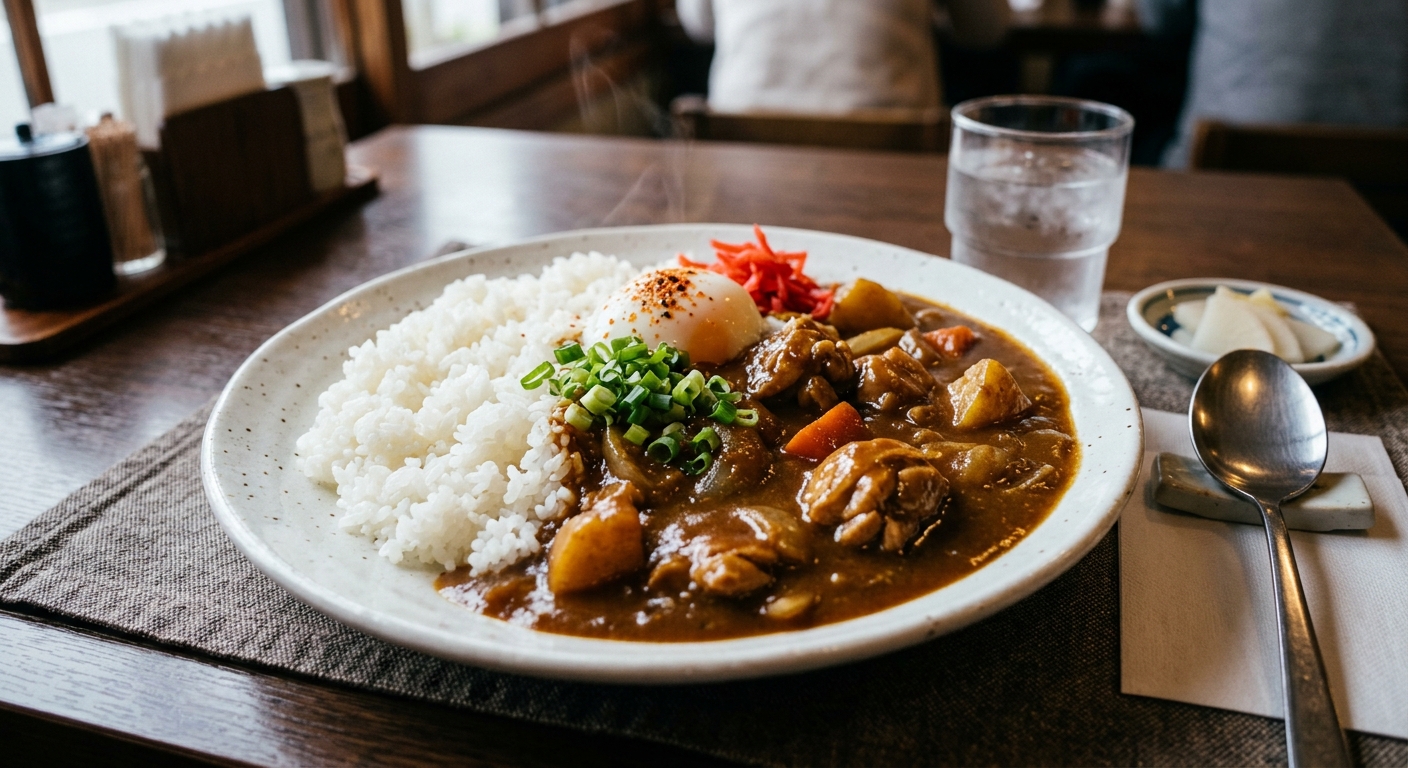
The sharp, intoxicating aroma of roasted spices and the blistering heat of fresh naan straight from the tandoor. Completely distinct from the thick, sweet, flour-based "Japanese curry" introduced by the British Navy, authentic "Indian Curry" has carved out a massive, passionate following in modern Japan.
History: A Revolution Spiced with Love
The history of curry in Japan follows two very different paths. One was the British Royal Navy route, which brought the mild, stew-like curry in the Meiji era. The other arrived in 1915 via Rash Behari Bose, an Indian revolutionary fleeing British authorities. Sheltered by the Nakamuraya bakery in Tokyo, Bose eventually introduced their menu to "Indo-Karii" (Indian Curry) in 1927. For the Japanese public, accustomed to flour-thickened stews, this bone-in chicken dish bursting with authentic spices was a literal taste of revolution.
The Essential Accompaniments
- Fukujinzuke: A sweet and savory relish made from seven chopped vegetables (like daikon and eggplant). Its crunchy texture perfectly cuts through the heat of the curry.
- Rakkyo: Sweet and sour pickled Japanese scallions (small white bulbs). The sharp acidity acts as the ultimate palate cleanser between rich, heavy bites of roux.
The Art of Eating Curry
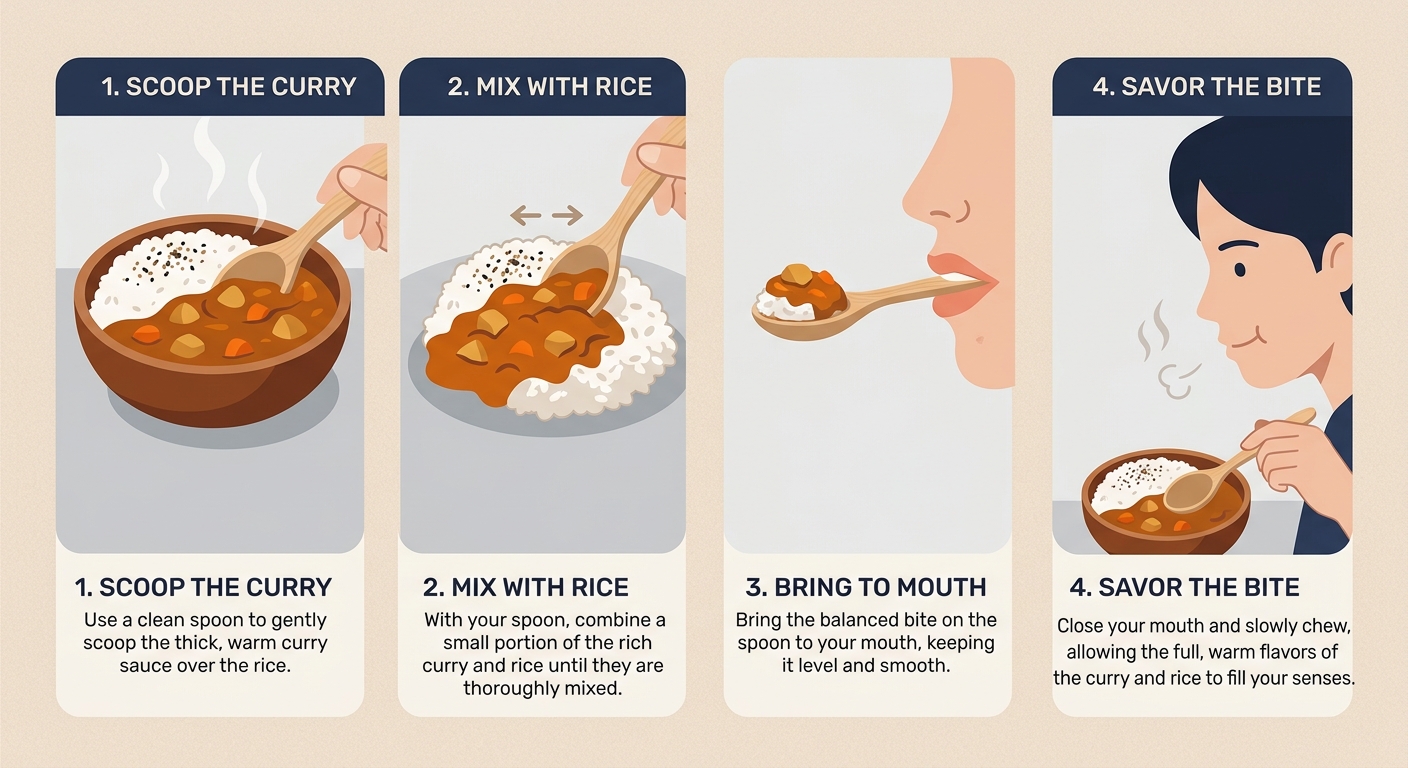
- Master the large spoon: Japan is a nation of chopsticks, but curry is strictly eaten with a large Western-style spoon. Eat progressively from the border where the rice meets the curry sauce.
- Tear the naan by hand: At Indian curry houses, you'll be served a massive piece of naan. Use your right hand to tear off bite-sized pieces and dip them directly into the curry.
- The "Second-Day" Culture: For home-cooked curry, it is a widely held belief in Japan that curry tastes best on the second day. Letting it "sleep" overnight allows the spices and umami to deepen and meld together beautifully.
⚠️ Taboos to Avoid
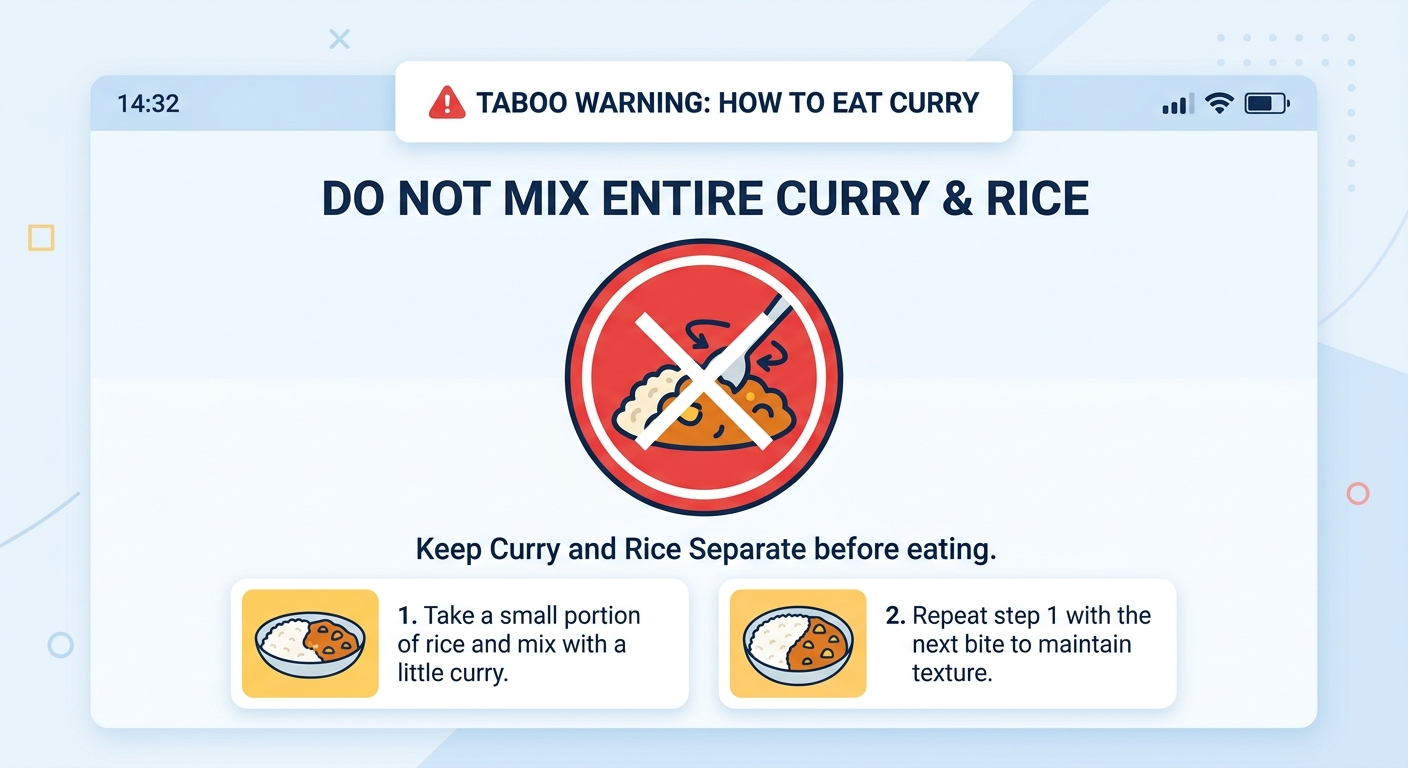
⚠️ Never mix the whole plate: Stirring your entire plate of rice and curry into a slurry before eating is considered "dirty" or messy in Japanese dining etiquette. Instead, scoop a little bit of rice and a little bit of curry together on your spoon for each individual bite.
⚠️ Leaving a single grain of rice is disrespectful: In Japanese culture, leaving rice behind is an insult to the farmers who grew it. Curry sauce can easily hide stray grains, so be sure to use your spoon to scrape your plate completely clean.