
Wafu Pasta
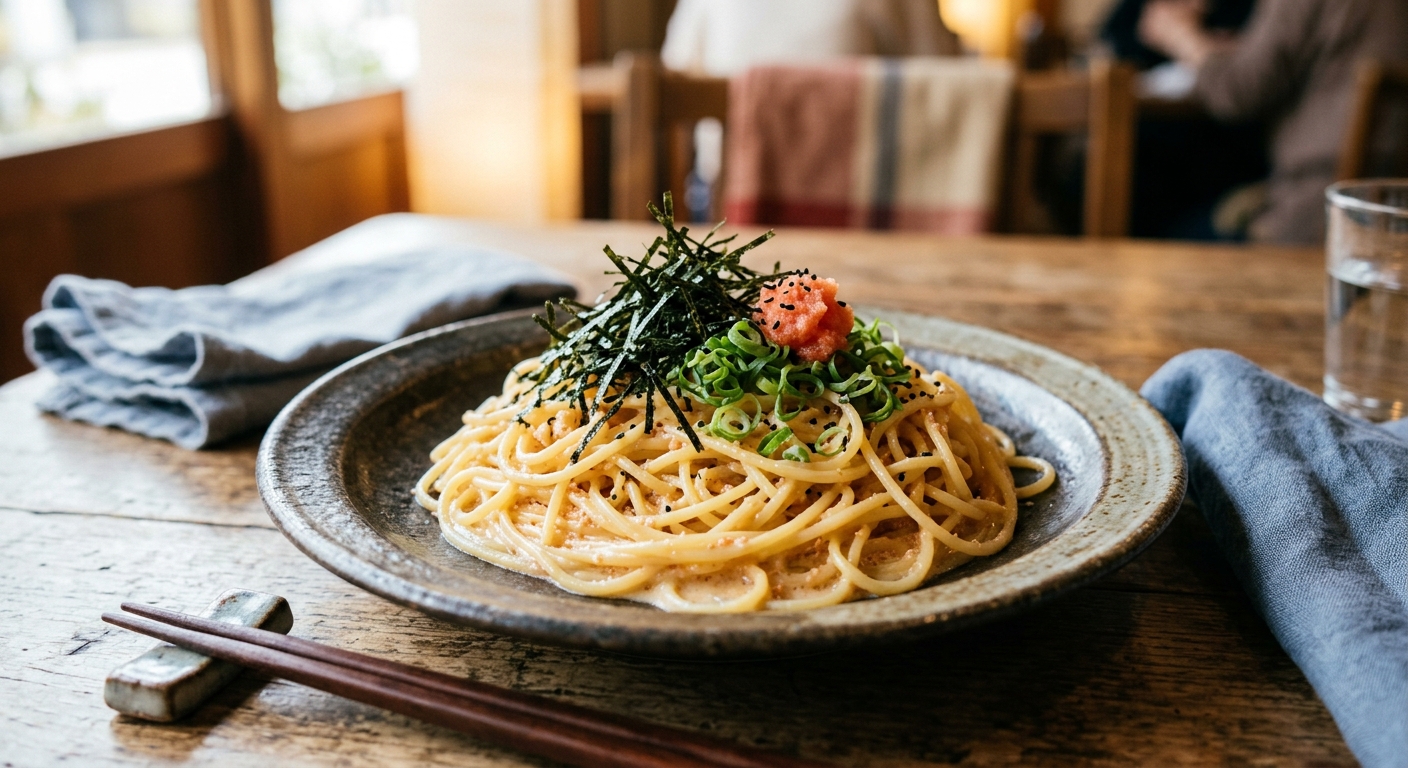
The savory sizzle of butter and soy sauce, the briny pop of cod roe, and the refreshing aroma of shiso leaves. When Italy's national dish collided with the refined umami of traditional Japanese seasonings, a miracle was born: Wafu Pasta, Japan's "other" beloved noodle dish.
Not Italian. Distinctly "Washoku".
Wafu (Japanese-style) pasta isn't just an Italian variation; it's a genre unto itself. Trading heavy tomato sauces and rich creams for bases of soy sauce, dashi (fish stock), butter, or olive oil, chefs boldly pair spaghetti with local staples like sea urchin, shiitake mushrooms, and seaweed. Today, it sits alongside udon and soba as a massive pillar of Japanese comfort food.
History and Origins
Following WWII, pasta began to evolve independently in Japan. In the 1950s, the owner of a Tokyo restaurant called Kabe no Ana (Hole in the Wall) was asked by a regular to make a pasta dish using caviar. Unable to source it affordably, the chef substituted Tarako (salted cod roe). Thus, Wafu Pasta was born. Soon after, everything from fermented soybeans (natto) to pickled plums (umeboshi) found its way into the pasta pot.
The "Must-Eat" Classics
- Tarako / Mentaiko Spaghetti: The original and the undisputed king. The combination of salty cod roe, rich butter, and shredded nori seaweed is dangerously addictive.
- Butter Soy Sauce Mushroom: A deeply savory, autumn-inspired classic featuring sautéed shimeji and shiitake mushrooms caramelized in butter and soy sauce.
- Natto Pasta: A hardcore local favorite where the sticky texture of fermented soybeans and a raw egg yolk cling perfectly to the noodles.
Etiquette: A Collision of Two Cultures
Eating Wafu pasta involves a fascinating blend of Western table manners and Japanese noodle habits.
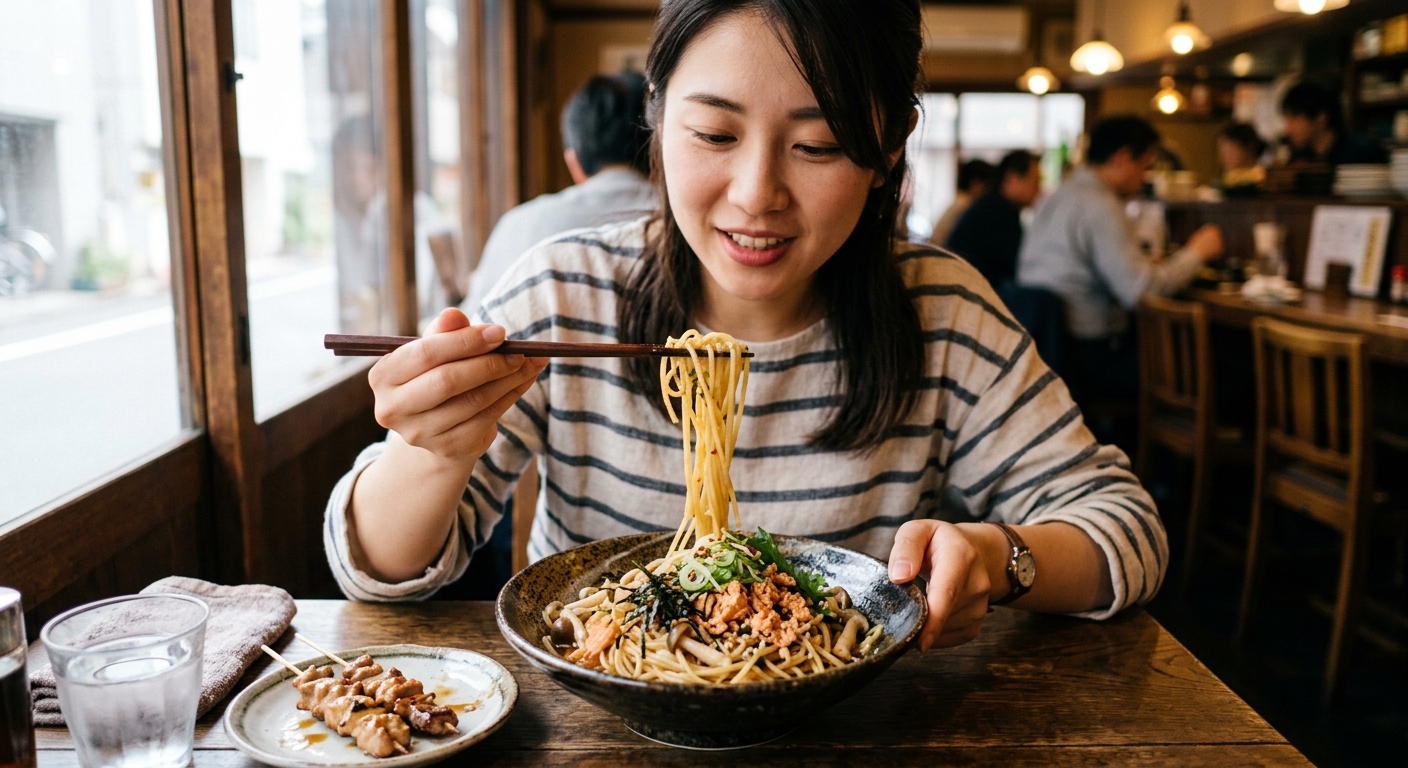
- Chopsticks are the Right Answer: While authentic Italian restaurants will provide a fork, specialized Wafu pasta chains (like the famous Yomenya Goemon) serve their spaghetti in deep, bowl-like plates on a tray. Eating it with chopsticks isn't just acceptable—it's the authentic way.
- Rebelling against "Al Dente": Unlike the strict Italian preference for a firm, toothsome bite, Wafu pasta is sometimes cooked slightly softer to mimic the comforting, chewy mochi-mochi texture of Japanese udon noodles.
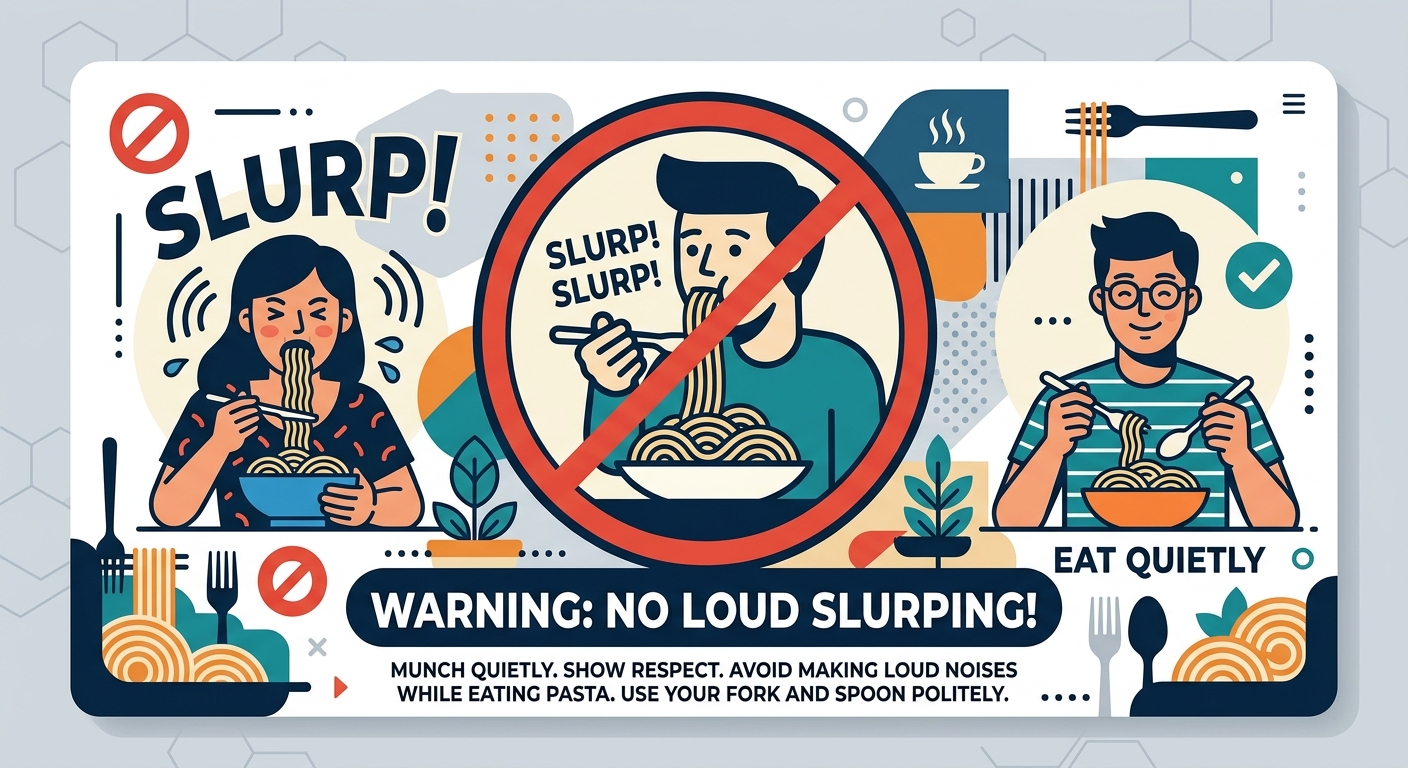
⚠️ Slurping is a "Gray Area" In Japan, slurping ramen or soba loudly is a compliment to the chef. However, with pasta, the rules blur. When eating with chopsticks at a casual Wafu shop, you might hear some light slurping, but generally, it is safer and more polite to respect Western manners and eat quietly without making noise.
Trivia
The famous "Spaghetti Napolitan"—a ketchup-based pasta with onions, green peppers, and ham—sounds Italian, but it was actually invented at a hotel in Yokohama, Japan! The chef was inspired by the military rations of American soldiers stationed there after the war.