
Wagashi
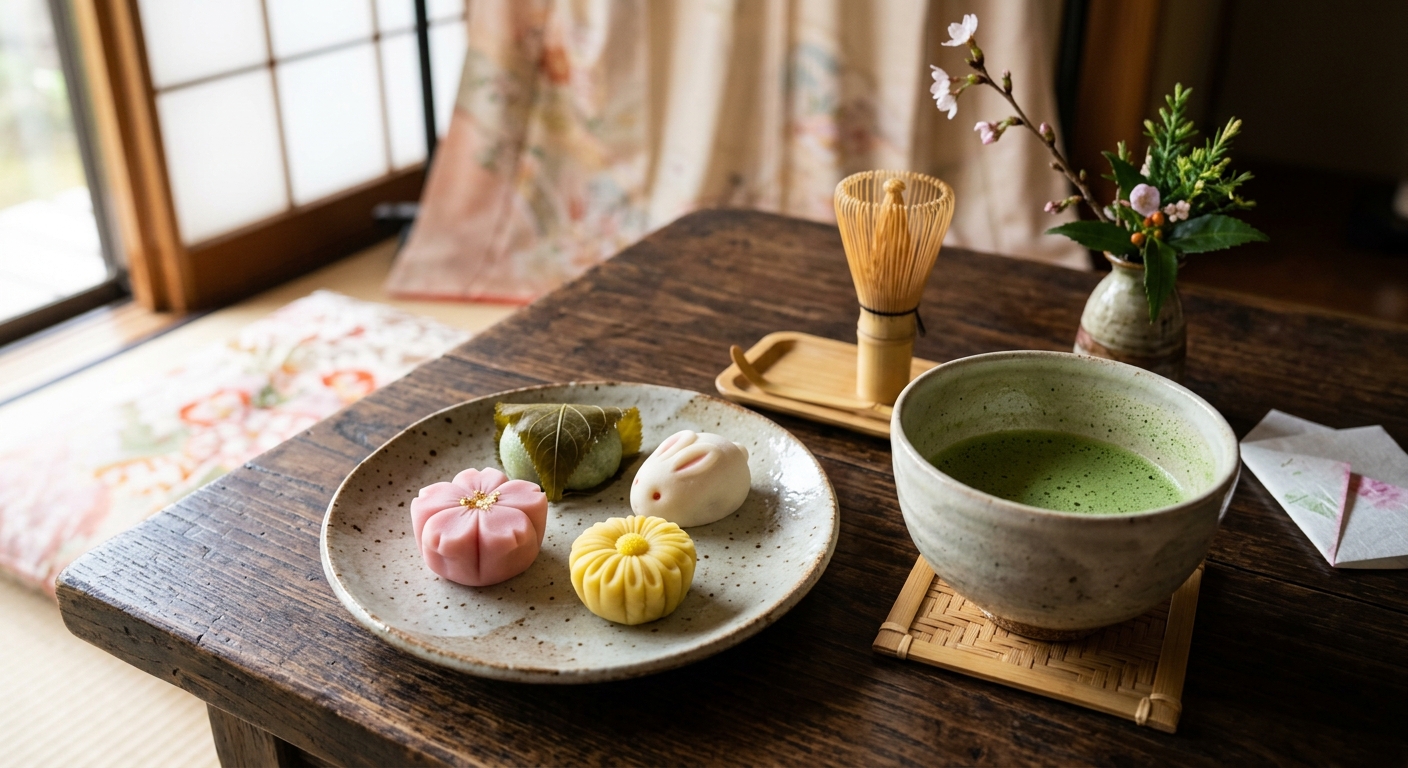
Wagashi: Edible works of art that condense the passing of the seasons into the palm of your hand. A crystallization of Japan's delicate aesthetic, designed to be savored with all five senses.
What is Wagashi?
Wagashi are far more than just sweet confections. They visually represent Japan's "micro-seasons" changing every few weeks—from spring cherry blossoms to summer hydrangeas. Furthermore, they are purposefully crafted to create a perfect, balancing harmony with the intense bitterness of matcha green tea in a traditional tea ceremony.
History & Origin
The roots of wagashi stretch back to the ancient Jomon period, when nuts and fruits were simply referred to as sweets. With the introduction of Buddhism, grain-based sweets arrived from China. During the peaceful Edo period, the spread of sugar allowed artisans to sculpt the intricate, nature-inspired masterpieces we recognize today.
Local Variants
- Nerikiri: The pinnacle of fresh sweets. Made by blending white bean paste with mochi, then meticulously sculpted by hand into seasonal flowers or nature motifs.
- Daifuku / Manju: The beloved, everyday comfort sweets of the masses, featuring sweet red bean paste wrapped in chewy mochi or a fluffy flour bun.
- Higashi (Dry Sweets): Elegant, finely pressed sugar candies made from premium wasanbon sugar that melt instantly on the tongue.
Authentic Eating & Etiquette
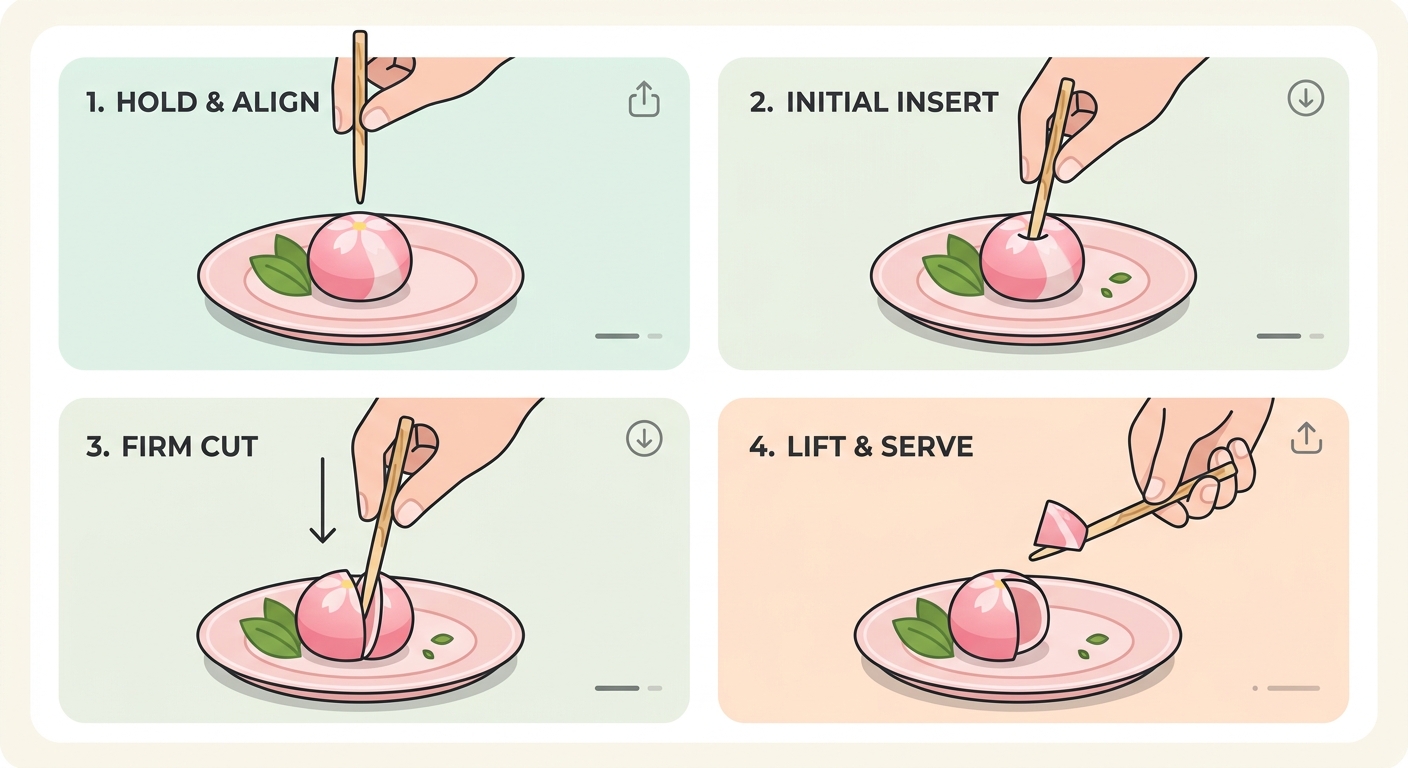
- Use the Kuromoji Pick: When eating fresh sweets like nerikiri or yokan, you must use a small wooden pick called a kuromoji. Use it to slice the sweet from the left side into bite-sized pieces (ideally three bites total).
- Eat Before the Tea: The strict rule of the tea ceremony is to completely finish your wagashi before taking a sip of matcha. The lingering, elegant sweetness left in your mouth serves to elevate the profound bitterness of the tea.
Trivia
The oak leaf wrapped around a Kashiwa Mochi is purely for fragrance and preventing stickiness—it is strictly inedible. However, the cherry leaf wrapped around Sakura Mochi is salt-pickled and perfectly edible; locals usually eat it together with the sweet to enjoy the contrast of salty and sweet.
Taboos & Warnings
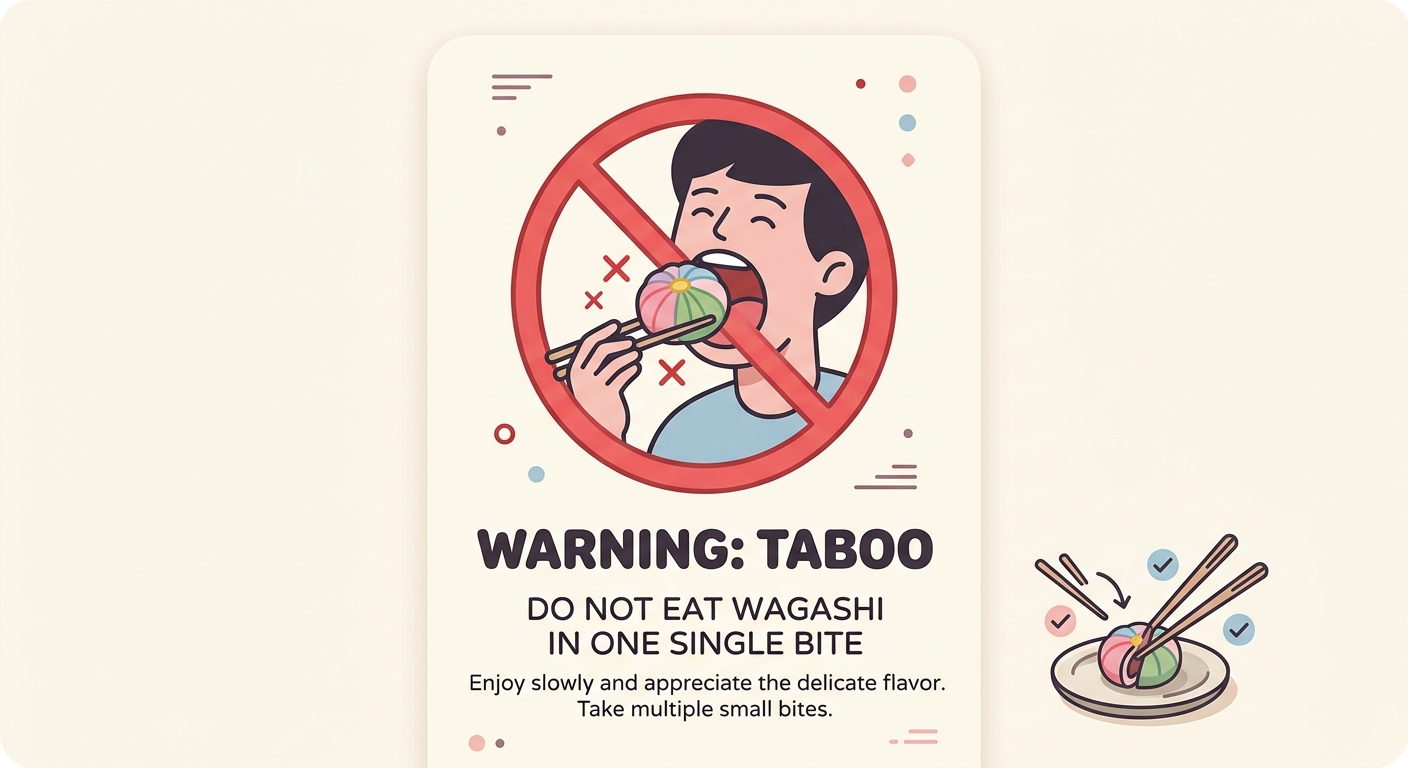
⚠️ Never Touch Fresh Wagashi with Bare Hands: Picking up a high-end fresh sweet directly with your fingers is considered a desecration of the artisan's work. Always use the provided wooden pick. Additionally, leaving unfinished wagashi on your plate is a major faux pas. If you cannot finish it, the polite etiquette is to discreetly wrap the remainder in paper and take it home.