
Bread
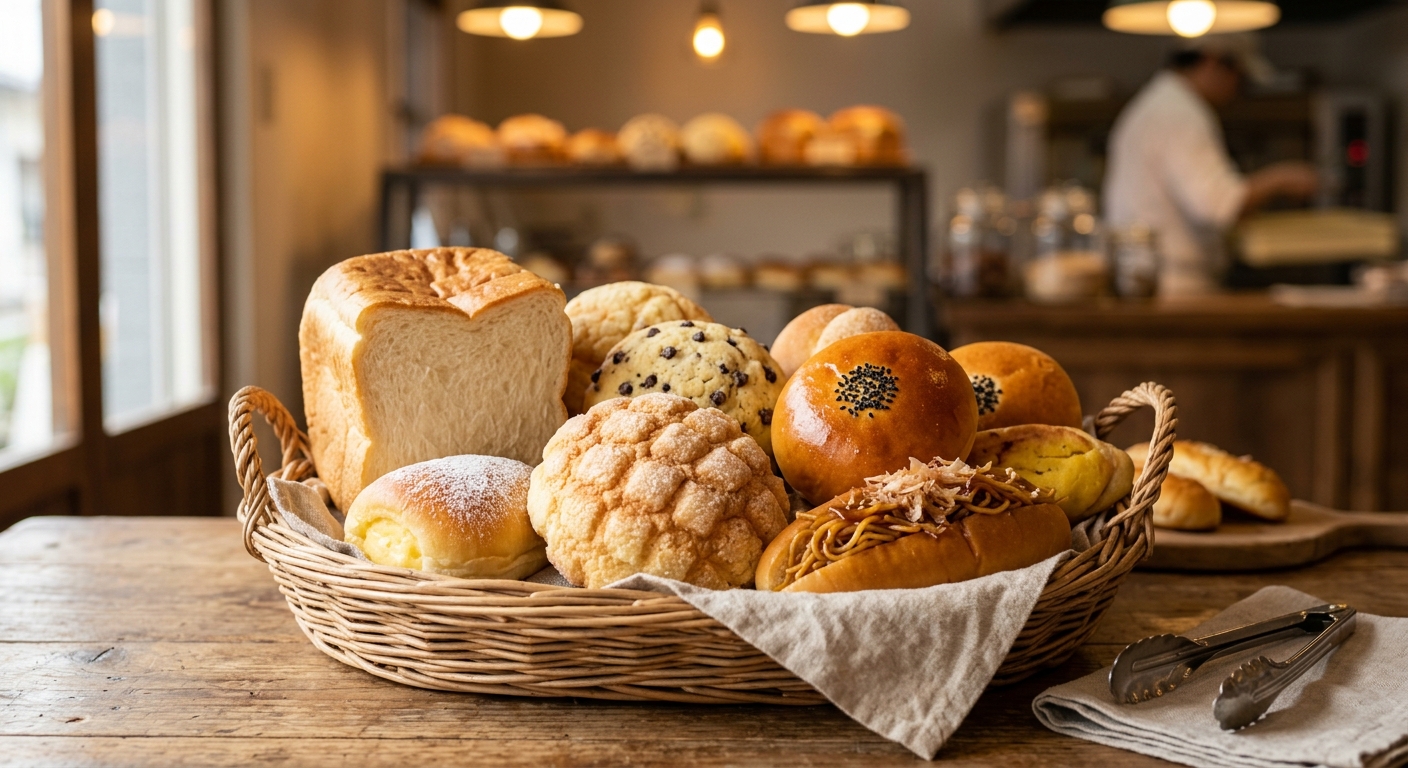
A perfect fusion of European tradition and Japanese innovation—welcome to the world of Japanese bread (Pan). From the pillowy softness of Shokupan (milk bread) to the savory crunch of Curry Pan, Japan's unique bakery culture is a sensory delight for any traveler.
History & Origin
The Japanese word for bread, pan, originates from the Portuguese pão. The true evolution of Japanese baking began in the 19th century with the invention of the Anpan (red bean bun). Since then, Japan has created an entirely unique genre of sweet and savory baked goods loved worldwide.
Authentic Eating & Etiquette
Most Japanese bakeries operate on a strict self-service system.
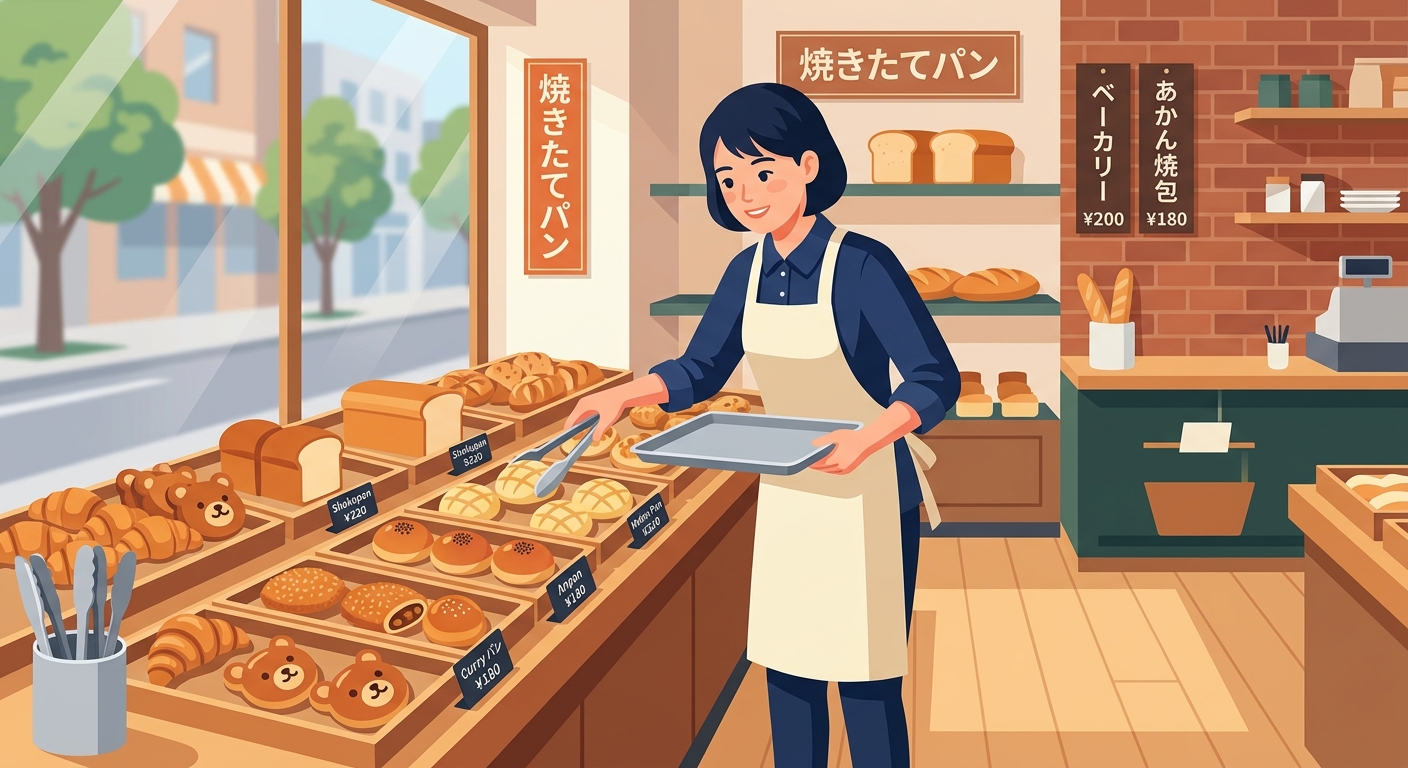
- Grab a Tray and Tongs: Upon entering, immediately look for the stack of sanitized trays and tongs near the entrance.
- Follow the Flow: In smaller shops, follow the natural "one-way" path of customers moving toward the register.
- Eat-in vs. Take-out: If the bakery has seating, tell the cashier "eat-in" (Tennai de) before paying, as Japan's consumption tax differs for dining in.
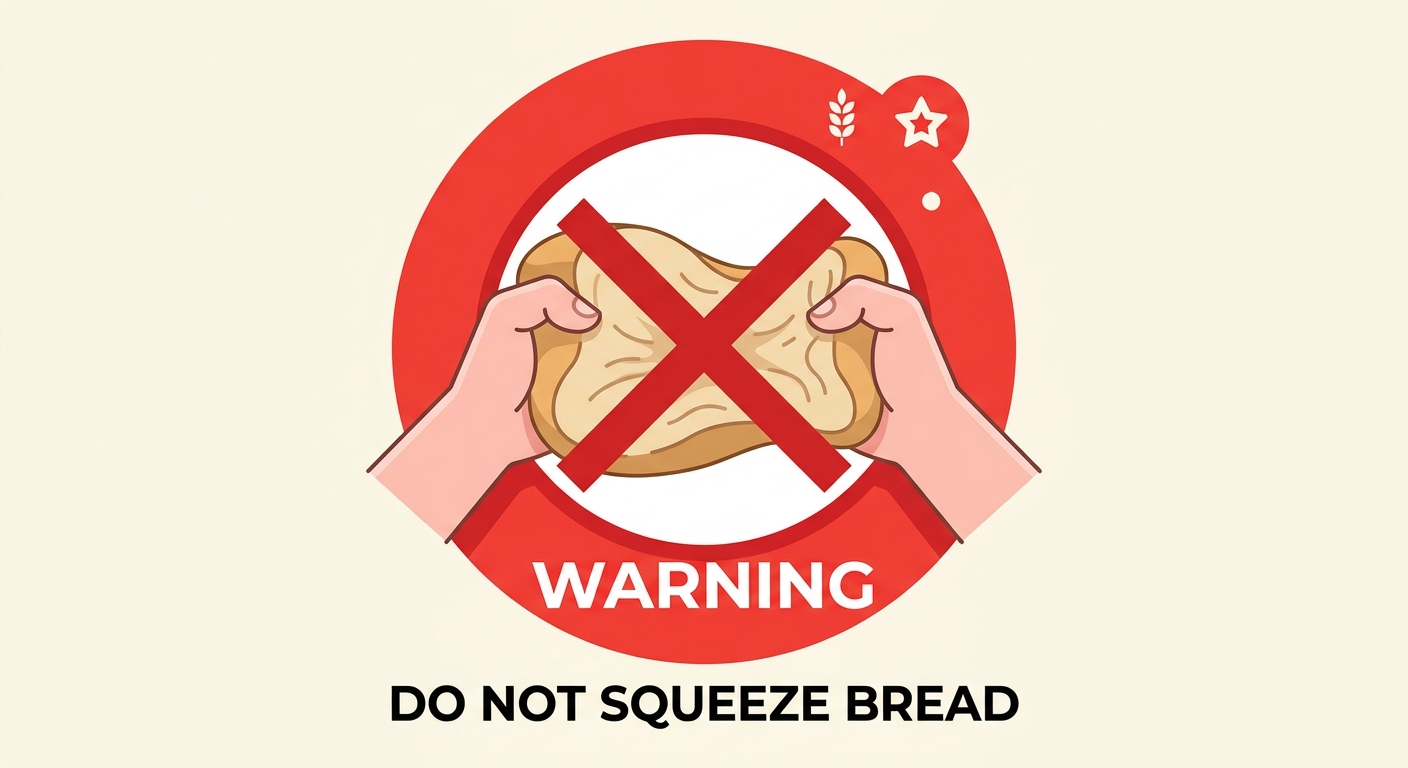
⚠️ STRICT RULE: Never Touch Bread with Your Hands
Touching unpurchased bread with your bare hands is the ultimate taboo in a Japanese bakery. You MUST always use the provided tongs to transfer items to your tray.
Trivia
Melon Pan doesn't actually taste like melon! It gets its name solely because the crispy, grid-patterned cookie dough baked on top resembles the rind of a cantaloupe melon.