
Tonkatsu
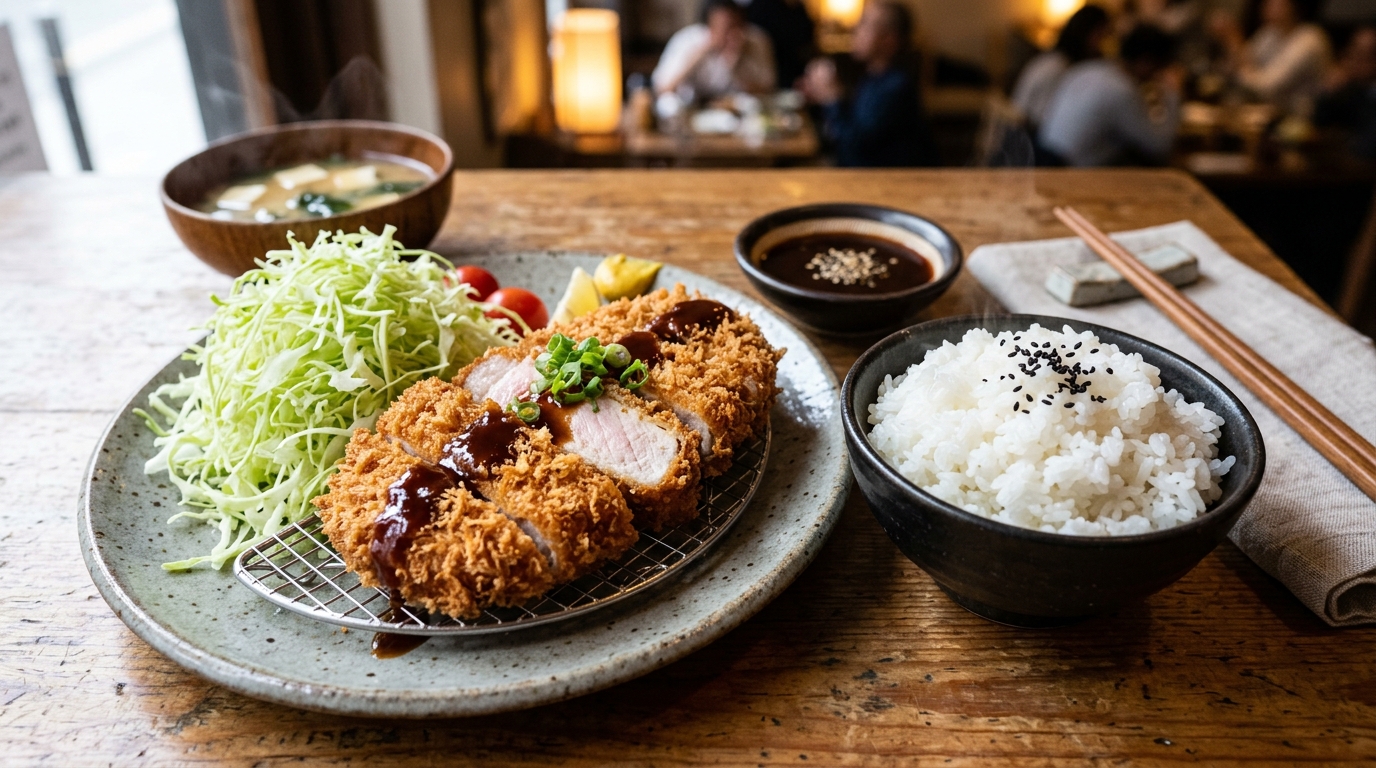
Bite into a thick cut of pork encased in an impossibly flaky, spiked crust of golden panko, and let the sweet fat and savory juices burst onto your palate. Born in the Meiji era as a Western-inspired dish, Tonkatsu is the undisputed king of Japanese Yōshoku (Western-style Japanese cuisine).
The Masterpiece of East-Meets-West
Originally inspired by the French côtelette de veau (veal cutlet), innovative Japanese chefs swapped veal for pork, traded fine breadcrumbs for airy, coarse panko, and deep-fried it like tempura instead of pan-frying it in butter. Pre-sliced to be eaten effortlessly with chopsticks, it became a uniquely Japanese soul food.
Choosing Your Cut: Rosu or Hire?
When you sit down at a Tonkatsu specialty shop, you'll be asked to choose between two iconic cuts:
- Rosu-katsu (Loin): The classic, kingly choice. It features a distinct cap of fat along the edge, delivering a rich, incredibly juicy, and flavor-packed experience.
- Hire-katsu (Fillet/Tenderloin): A leaner, healthier option that is astonishingly tender. Perfect for those who prefer a lighter, more delicate meal without the heavy fat.
Authentic Eating Etiquette
There is a deeply satisfying ritual to eating Tonkatsu like a local.
- The Cabbage Comes First: That mountain of shredded raw cabbage isn't just a garnish. Eating the cabbage first provides dietary fiber that aids in digesting the fried oil and serves as a palate cleanser. (Bonus: In most specialty shops, cabbage, rice, and miso soup refills are entirely free!).
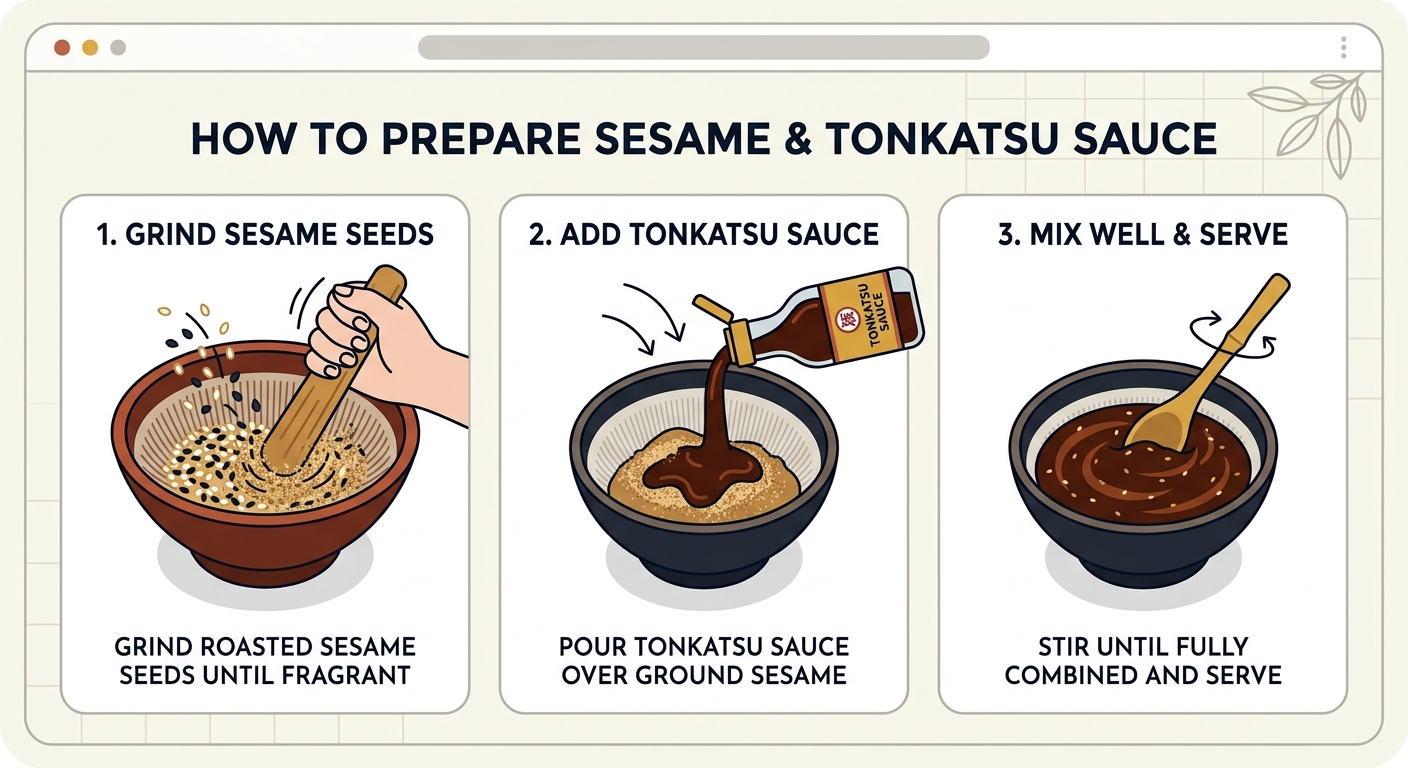
- The Sesame Ritual: Many restaurants bring you a tiny mortar and pestle with toasted sesame seeds. Grind them yourself until fragrant (about 70% crushed), then pour the thick, sweet-savory Tonkatsu sauce into the bowl to create your dip.
- The First Bite (Salt Only): If you ordered premium branded pork (like Kurobuta), connoisseurs insist you eat the very first piece with nothing but a pinch of salt. This highlights the intense, natural sweetness of the high-quality meat.
- A Touch of Karashi: You'll find a dab of yellow Japanese mustard (Karashi) on the edge of your plate. Smear a tiny amount onto the meat to cut through the richness of the fat with a sharp, tangy kick.
⚠️ Pro-Tip: The "Meat-Side Down" Rule True Tonkatsu aficionados place the slice in their mouth with the exposed meat cross-section resting directly on their tongue. This allows you to taste the pure umami of the pork first, while protecting the top layer of crispy panko from getting soggy.
Trivia
The word Katsu sounds exactly like the Japanese verb for "to win" (勝つ). Because of this lucky pun, it is a massive cultural tradition for Japanese students to eat Tonkatsu the night before a huge exam, or athletes before a big match, to guarantee a "winning" outcome.