
Japanese Curry
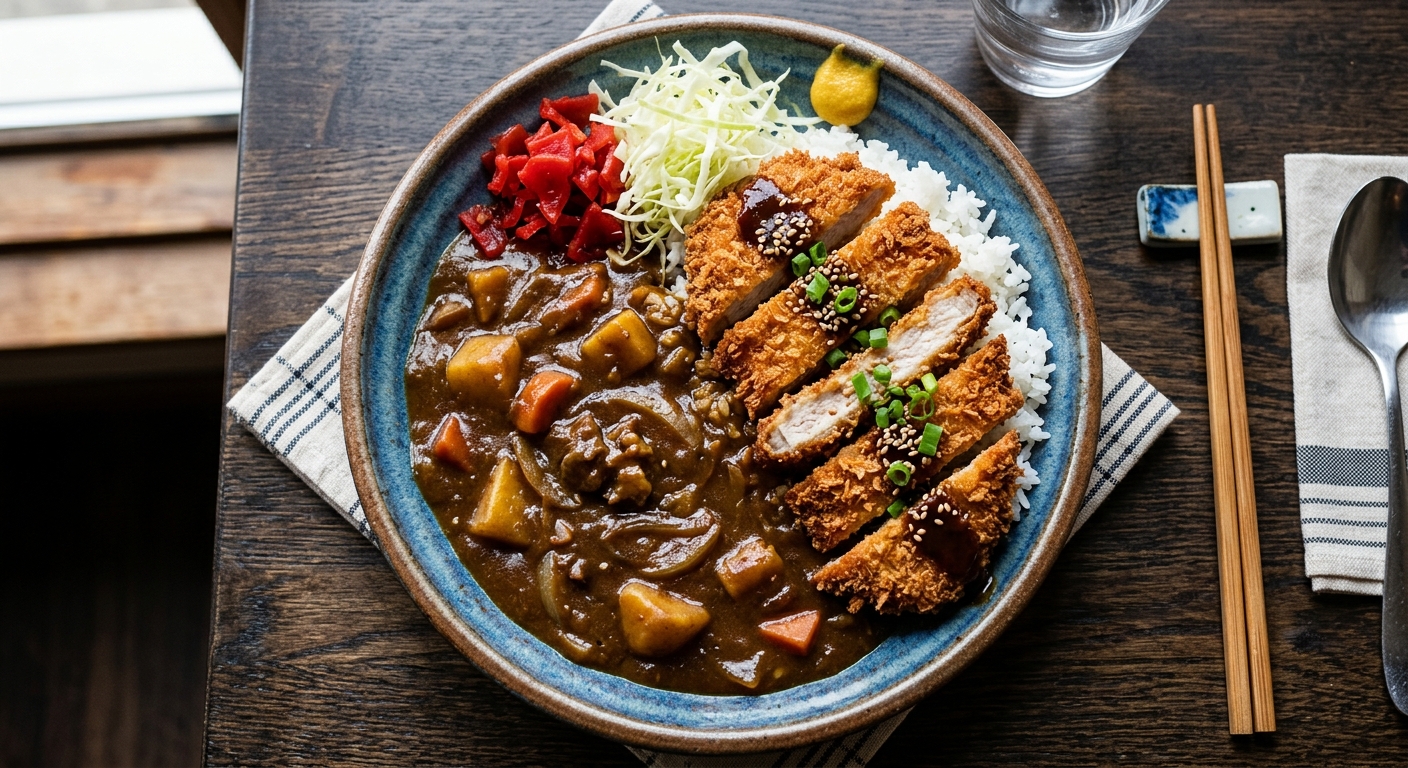
Spicy yet deeply comforting with a touch of sweetness. Curry may have originated in India, but it took a detour through the British Royal Navy before arriving in Japan, where it evolved into the nation’s ultimate comfort food: Kare Raisu.
A Military Cure Turned National Dish
During the Meiji Era, the Imperial Japanese Navy faced a devastating outbreak of beriberi (a vitamin B1 deficiency) because sailors ate almost nothing but polished white rice. The solution came from the British Navy: a thick, flour-based curry stew packed with meat, potatoes, and carrots. This robust stew completely cured the fleet and birthed Japanese curry. Unlike the thin, broth-like curries of India, the Japanese version is characterized by a thick, rich, slightly sweet roux that clings perfectly to sticky Japanese rice.
The Happy Accident: Fukujinzuke
If you order curry in Japan, it will almost certainly arrive with a bright red or amber relish on the side. This is Fukujinzuke, a crunchy, sweet-and-salty pickle made from seven lucky vegetables.
The pairing is legendary. In the early 1900s, aboard the luxury steamship Mishimamaru bound for Europe, the kitchen ran out of the Indian chutney normally served with curry. A quick-thinking cook substituted Fukujinzuke instead. The passengers were captivated by how the sharp crunch and soy-vinegar tang sliced right through the heavy richness of the curry roux. The combination became an instant national phenomenon.

The Golden Spoon Rule
Whether you are dining in a retro yoshoku (Western-Japanese) diner or a family kitchen, Japanese curry is eaten exclusively with a single spoon.
⚠️ Do Not Mix It All Up: While it might be tempting to vigorously stir your curry and rice together into a uniform mush—as you might with a bibimbap—this is frowned upon in Japan. The polite way to eat Kare Raisu is to use your spoon to scoop a little bit of roux and a little bit of white rice together for each individual bite.
From the fiercely spiced "Soup Curry" of Sapporo to the gloriously indulgent Katsu Curry (topped with a fried pork cutlet), the variations are endless. Dig in and taste how Japan transformed a foreign stew into its own culinary masterpiece.